

The selection of lubricant for a CNC vertical lathe requires careful consideration of the equipment structure, operating conditions, and environmental conditions. Consider five key factors: lubrication location, performance requirements, environmental compatibility, brand quality, and regular replacement and maintenance.
Select a specific lubricant based on the lubrication area.
Many areas of a CNC vertical lathe require lubrication. These lubrication points are located in key areas such as the guideways, spindle, gearbox, and hydraulic system. However, these areas also have varying lubricant performance requirements.
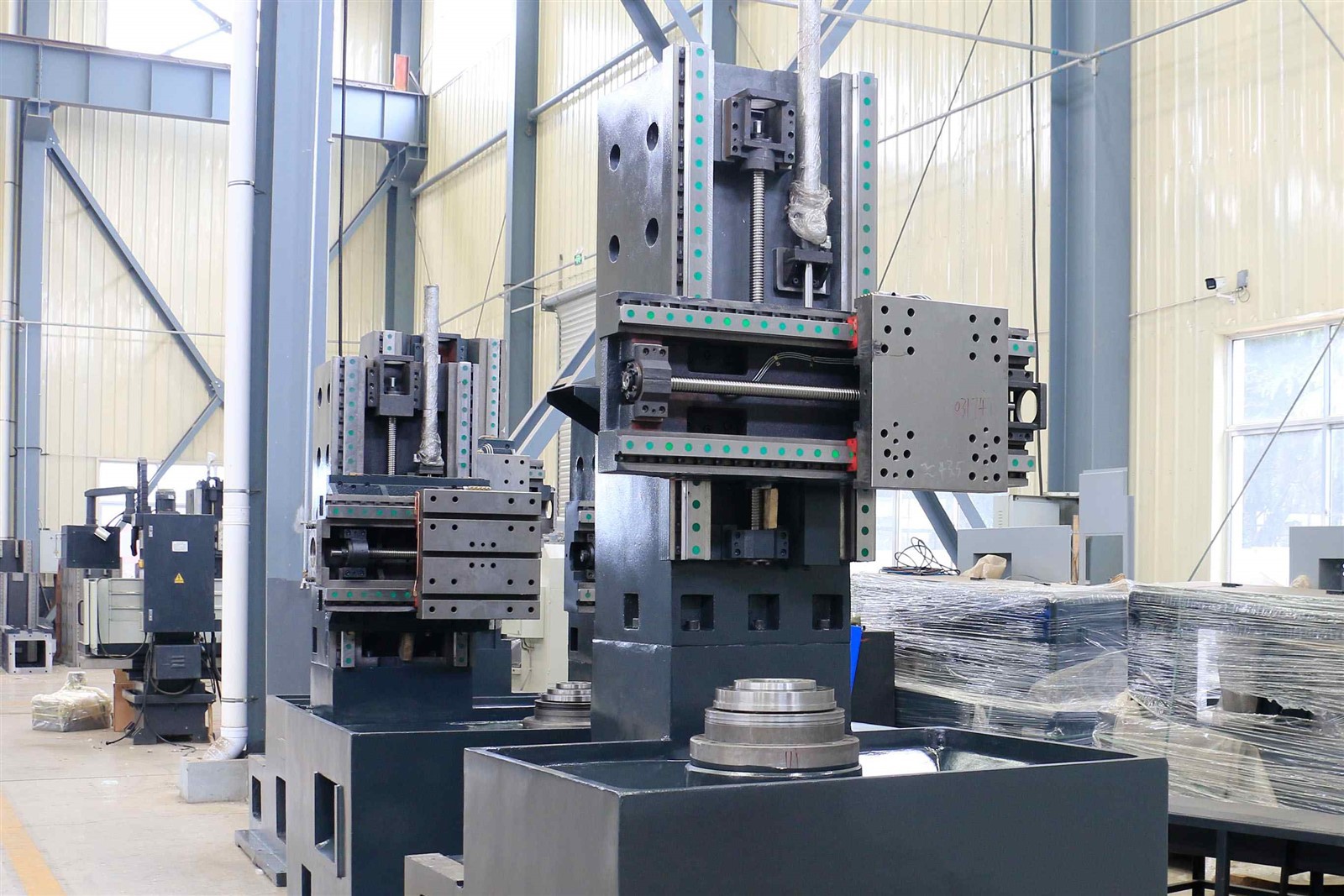
Guides and ball screws
The ball screws and guideways of a CNC vertical lathe are subject to high loads and repeated friction. Therefore, high-viscosity linear guide oil or synthetic oil is required. This lubricant must have excellent lubrication and rust prevention properties, effectively reducing friction and extending the service life of the guideways and ball screws. For example, a guideway oil with a viscosity grade of ISO VG 68 or 100 effectively balances lubricity and fluidity.
Spindle
The spindle bearings and internal gears of CNC vertical lathes are subject to high temperatures and pressures caused by high-speed rotation, necessitating the use of high-performance spindle oil or synthetic oil. Spindle lubricants must possess excellent anti-wear, anti-oxidation, and thermal stability to ensure stability and precision at high speeds. For example, a spindle oil with a viscosity grade of ISO VG 32 or 46 can meet the dual lubrication and cooling requirements of the spindle.


Gearbox
Gearboxes transmit power and withstand shock loads, requiring the use of gear oil. Selecting the appropriate viscosity grade based on the operating temperature and load of the gearbox ensures effective lubrication between gears and reduces wear. For example, heavy-duty gearboxes can use gear oil with a viscosity grade of ISO VG 150 or 220 to provide sufficient oil film thickness and anti-wear protection.
Hydraulic system
Hydraulic systems transmit power and control machine tool motion, requiring the use of hydraulic oil. Hydraulic fluids must possess excellent lubricity, rust resistance, and oxidation resistance to ensure efficient and stable operation of hydraulic systems. For example, anti-wear hydraulic fluids (such as HM 46 or HM 68) can meet the dual requirements of lubrication and anti-wear in hydraulic systems.

Selecting Lubricants Based on Operating Conditions and Performance Requirements

Processing Material
The lubricant used in a CNC vertical lathe is closely related to the part being machined, and different materials have different compatibility with lubricants. For example, when machining aluminum alloys, a lubricant specifically formulated for aluminum alloys is required to prevent chemical reactions between the aluminum alloy and the lubricant's components, which could degrade the workpiece surface quality. When machining stainless steel, a lubricant specifically formulated for stainless steel is required to provide sufficient extreme pressure and anti-wear properties to prevent tool wear and scratches on the workpiece surface.
Processing Process
Different CNC vertical lathe processes require different lubricants. When performing cutting and turning operations, the lubricant must provide excellent cooling properties to reduce cutting temperatures and extend tool life. Grinding processes require lubricants with excellent lubrication and rust-proof properties to prevent corrosion of the workpiece and machine tools by the grinding fluid.


Load Conditions
When CNC vertical lathes are subjected to heavy loads, a lubricant with higher viscosity and stronger anti-wear properties should be selected to provide sufficient oil film thickness and anti-wear protection. For light-load machining, a lubricant with lower viscosity and better fluidity can be used to reduce friction and improve machining efficiency.
Considering the Impact of Environmental Factors on Oil
●Temperature: High temperatures in CNC vertical lathe lubricants accelerate oxidation and deterioration, necessitating the selection of lubricants with strong anti-oxidation properties. Low temperatures increase viscosity and reduce fluidity, necessitating the selection of lubricants with lower pour points and higher viscosity indexes. For example, in low-temperature environments below -20°C, lubricants with pour points below -30°C should be selected to ensure normal startup and operation at low temperatures.
●Humidity: Humid environments can easily cause CNC vertical lathe lubricants to emulsify and deteriorate, necessitating the selection of lubricants with strong anti-emulsification properties. For example, hydraulic oil with excellent anti-emulsification properties can quickly separate when water intrudes, maintaining the oil's stability and lubrication properties.
● Special Substance Contact: If the CNC vertical lathe's operating environment is exposed to special substances such as water and chemicals, a lubricant with appropriate protective properties should be selected. For example, in environments with cutting fluids, a lubricant with strong rust-resistant properties should be selected to prevent corrosion of the workpiece and machine tools.