

What is Flat bed cnc lathe
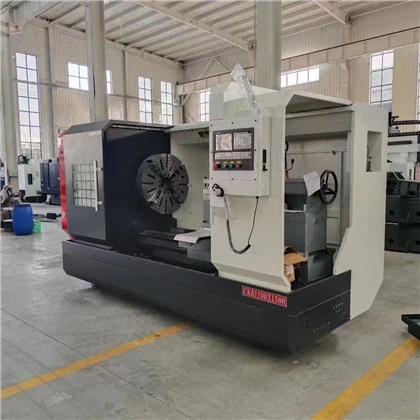
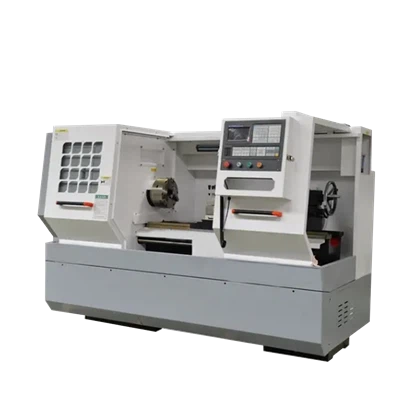
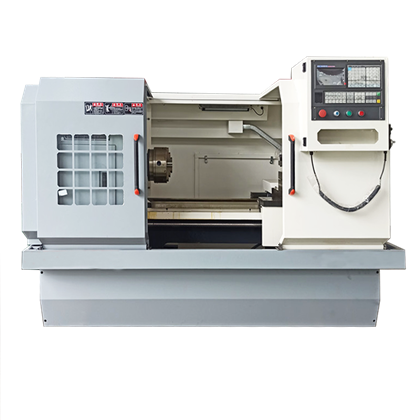
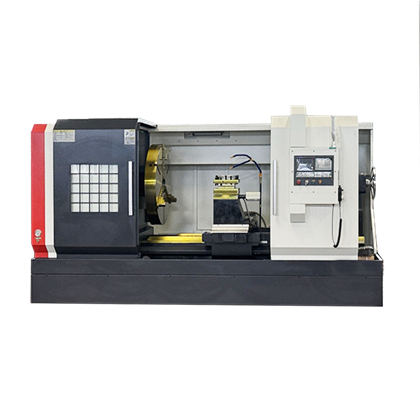
A flat-bed CNC lathe utilizes a horizontal flat bed structure with two guideways parallel to the ground. It offers high stability, rigidity, precision, and cost-effectiveness, making it suitable for the precision machining of a wide variety of parts in small to medium batches. Flat-bed lathes provide exceptional stability during machining, making them ideal for heavy part machining. Flat-bed CNC lathes are particularly well-suited for finishing shafts and plates, especially for heavy cutting and machining long shafts.
-

Multifunctional Precision CNC Flat Bed Lathe
The CK series multi-functional precision CNC flatbed lathe features optimized design for its main components and structure. The spindle system employs a four-speed transmission (30-84, 300-835, Add to Inquiry -
Precision Metal Turning Horizontal Lathe
The CK series precision metal turning horizontal lathe is one of the CNC machine tool series mass-produced by our factory. The machine tool boasts high economic efficiency and practicality. This Add to Inquiry -
CK Series CNC Horizontal Lathe
The CK series CNC horizontal lathes are characterized by high precision, high power, and high rigidity. Their main components and structures have been optimized, making them ideal for machining Add to Inquiry -
Ordinary Horizontal CNC Lathe Gear Transmission
The conventional lathe is the most widely used type of lathe, accounting for about 65% of the total number of lathes. The conventional lathe is a horizontal lathe that can perform multiple processes Add to Inquiry -
Ordinary CNC Lathe Industrial Cutting Equipment
Conventional CNC lathes feature an integrated bed structure, resulting in a compact and aesthetically pleasing design. They boast high spindle torque, high rigidity, stable and reliable performance, Add to Inquiry -
Economic Heavy-duty Cutting Horizontal Lathe
1. High-frequency hardened guideways for high hardness and wear resistance.2. Spindle with paired angular contact ball bearings for high speed and high rigidity.3. A replacement product for Add to Inquiry -
Horizontal Fully Automatic Hardened Rail CNC Lathe
The horizontal fully automatic hard-rail CNC lathe is suitable for machining large and medium-sized parts made of various steel, cast iron, and non-ferrous metals. It boasts high power and rigidity, Add to Inquiry -
CNC Machined Workpiece Turning On A Flat-bed Lathe
The CK6140 CNC machined workpiece turning on a flat-bed lathe is a horizontal, high-precision, large-scale, fully automatic CNC machine tool with a hard-rail guide structure. It is primarily used Add to Inquiry -
High-efficiency CNC Machine Tools For Metal Parts Machining
In horizontal lathes, the spindle is positioned horizontally, resulting in a low center of gravity after workpiece clamping, ensuring high rotational stability. This makes them suitable for machining Add to Inquiry -
Hard Rail CNC Machine Tools
The CK6180 CNC machine tool is a CNC lathe widely used in the field of mechanical processing. It has the characteristics of high precision and high efficiency, and is suitable for processing rotary Add to Inquiry -
Large-diameter Hardened Guide CNC Machine Tool
Large-diameter hardened guide CNC machine tool is a metal cutting device based on a horizontal layout. It achieves automated machining by controlling the relative movement of the cutting tool and the Add to Inquiry -
CK 6140 Horizontal CNC Lathe
Our CK 6140 Horizontal CNC Lathe is widely used in various industrial fields and has become an indispensable piece of equipment in modern manufacturing. Add to Inquiry






Advantages of Flat bed CNC lathe
Optimized Bed Structure
Flat-bed CNC lathes feature a wide horizontal bed with an integral box-type base. They are constructed using high-strength cast iron and resin sand casting. A thorough aging treatment eliminates internal stresses, increasing the bed's torsional strength by over 30%. The guide rails on these flat-bed CNC lathes undergo high-frequency quenching and precision grinding, achieving a hardness of HRC52+ and excellent wear resistance, ensuring deformation of less than 0.01mm during heavy cutting.
Outstanding vibration resistance.
The flat-bed CNC lathe's horizontal structural layout results in a low center of gravity. Combined with hardened rails and a plastic-coated finish, the friction coefficient is reduced to 0.04–0.08, effectively absorbing cutting vibrations. When intermittently turning castings, the flat-bed CNC lathe maintains a stable surface roughness within Ra1.6μm, improving vibration resistance by 40%.
Long-term Stable Accuracy
The flat-bed CNC lathe's hard rails are plastic-coated to significantly reduce low-speed creep. Equipped with a direct-drive ball screw and a semi-closed-loop control system, the flat-bed CNC lathe maintains stable workpiece machining accuracy at IT6–IT7 levels (4810). The flat-bed CNC lathe utilizes an independent spindle structure with high-precision bearings, minimizing thermal deformation. The variable-frequency motor achieves stepless speed regulation within gears, preventing
Low Cost High Efficiency
Flat-bed CNC lathes are often referred to as economical CNC lathes. They have a lower purchase cost than other CNC lathes and are suitable for small and medium-sized enterprises and single-piece processing needs. Flat-bed CNC lathes offer low maintenance costs, and the guide rails and lead screws feature an automatic lubrication system, reducing maintenance frequency and extending service life.
Why Choose Us
High quality
Our products are manufactured or executed to very high standards, using the finest materials and manufacturing processes.
Rich experience
Dedicated to strict quality control and attentive customer service, our experienced staff is always available to discuss your requirements and ensure complete customer satisfaction.
Quality control
We have professional personnel to monitor the production process, inspect the products and ensure that the final product meets the required quality level standards, guidelines and specifications.
24h online service
We try and respond to all concerns within 24 hours and our teams are always at your disposal in case of any emergencies.
Types of Flat Bed CNC Lathe
Common Flat-Bed Lathe
Ordinary manual flat-bed lathes (fully mechanical transmission) retain their irreplaceable advantages in the CNC era, particularly in low cost, adaptability, ease of maintenance, and specialized process applications. Flat-bed lathes are the most widely used type of machine tool, capable of cutting external diameters, internal holes, end faces, and threads on a variety of workpieces.
Heavy-duty flat-bed CNC lathe
The maximum swing diameter on the heavy-duty flat-bed CNC lathe bed can reach over 1000mm (e.g., with a chuck diameter of 400mm), making it suitable for machining large workpieces. It supports high stock removal (such as rough turning steel parts). The increased bed guideway width and longer tailstock quill travel improve stability. Suitable for machining large shafts and discs.

Economical Flat-Bed CNC Lathe
Economical Flat-Bed CNC Lathes utilize a gang-type tool post, reducing turret costs and facilitating fast tool changes. Equipped with a basic CNC system (such as Guangshu and Kaindi), they support semi-closed-loop control and achieve accuracy up to IT7-IT8. The cost is low and it is suitable for small and medium-sized enterprises with limited budgets. It is suitable for single-piece or small-batch processing, such as mold parts and non-standard shaft parts.
Customizable Flat-Bed Lathe
Based on a standard flat-bed structure, the modular design offers flexible options for toolholder type, drive unit, spindle parameters, and other functions. Customizable bed dimensions, special fixtures, or automation systems are also supported. These customizable lathes meet the high adaptability requirements of high-mix, low-volume production and achieve high-precision machining of complex parts.
How to Choose flat bed cNC lathe
Determine your application needs
Before purchasing a flat-bed CNC lathe, it's crucial to understand your specific application needs. Consider the type of material you'll be machining, the size and weight of your workpieces, and the complexity of the parts you need to produce.
Determine your machining requirements
For a flat-bed CNC lathe, determine the machine's machining range, such as maximum swing diameter and maximum machining length, based on the dimensions of the part being machined to ensure the machine can meet your machining needs. Select the machine's accuracy grade based on the part's precision requirements.
Select a reputable manufacturer
The quality and performance of a flat-bed CNC lathe depends largely on the manufacturer. It's crucial to choose a reputable manufacturer known for producing high-quality machines. You should research the company's background, product history, and customer reviews to ensure you're making a wise investment.
Consider the cost and efficiency
Finally, consider the cost and efficiency of the flat-bed CNC lathe you plan to purchase. While a more expensive machine may offer better performance and greater precision, it may not be the most cost-effective option for your business. It is crucial to evaluate the return on investment and determine whether the added cost will significantly improve productivity and quality.
Material of Flat bed CNC Lathe
Flat-bed CNC lathes utilize resin sand molding and high-quality cast iron. Its high compressive strength, excellent shock absorption, and wear resistance make it widely used, making it suitable for high-load machining. Flat-bed CNC lathes require more demanding casting processes, but they offer superior tensile strength and fatigue life.

Application of Flat bed CNC Lathe
Automotive manufacturing industry
Flat-bed CNC lathes are used in the automotive industry to machine key components such as engines, transmissions, and wheels, enabling high-precision machining of complex shaft parts such as crankshafts and connecting rods.
01
Aerospace field
In aerospace manufacturing, flat bed CNC lathes are used to process ultra-precision parts such as aircraft engine blades and aerospace equipment. The high-rigidity bed and precision guide rail system can reduce vibration and ensure processing stability.
02
General Machinery Manufacturing
Flat-bed CNC lathes are suitable for machining common parts such as bearings, threads, and gears. Their flexible programming capabilities and efficient machining capabilities meet the production needs of a wide variety of small and medium-volume products.
03
Mold manufacturing industry
Flat-bed CNC lathes are used to process plastic molds and die-casting molds. Combined milling and turning capabilities or powered turret configurations enable complex curved surfaces in mold cavities, improving mold manufacturing efficiency and quality.
04
Electronic consumer goods industry
Flat-bed CNC lathes enable high-precision machining of components for electronic products such as mobile phones and computers, meeting the growing trend toward lighter and higher-performance electronic products.
05
Process of Flat-bed CNC lathe
Preparation
Before starting machining, the operator needs to perform a series of checks and settings on the machine tool. First, check whether all parts of the machine tool are intact, such as guide rails, cutting tools, spindles, etc. Then, set the compensation value of the tool to ensure the accurate position of the tool during processing. In addition, the corresponding processing parameters must be set according to the drawings of the processed parts, such as spindle speed, feed speed, tool path, etc.
Clamp the workpiece
Flat-bed CNC lathes require fixtures (such as three-jaw chucks or hydraulic chucks) tailored to the workpiece shape (e.g., cylindrical, irregularly shaped) to ensure accurate positioning. Tools must be mounted on toolholders (e.g., gang tool holders or powered turrets) as required by the program and adjusted to their initial position, enabling quick tool changes and improving machining efficiency.
Tool selection and setting
Select the appropriate tool according to the requirements of the processed parts. The selection of cutting tools is mainly based on factors such as processing materials, processing technology, and processing surface quality. After selecting the tool, you also need to set the tool's compensation value to ensure the accurate position of the tool during processing. In addition, the wear of the cutting tools must be checked and seriously worn cutting tools should be replaced in time to ensure the processing quality.
Programming
The machining process on flat-bed CNC lathes is performed through programming. During programming, the operator creates a machining program based on the part drawing. This program primarily includes coordinate system setup, tool path planning, feed rate and spindle speed settings, and tool compensation settings. During programming, it is important to fully consider potential machining issues, such as tool interference and the allocation of machining allowances.
Processing
After completing the above preparations, start the flat-bed CNC lathe and simulate program execution using the "Machine Lock + Dry Run" mode to check for tool path interference and correct logic. Then, perform a trial cut of the first piece, observe the machining process, and measure the workpiece dimensions. If the dimensions are unacceptable, adjust the program or tool compensation.
Handling after processing
After machining on the flat-bed CNC lathe, the machined parts need to be inspected to ensure that the quality meets the requirements. If any quality issues are found, analyze the cause and adjust the machining parameters or reprogram the machine promptly. At the same time, perform cleaning and maintenance on the machine, such as removing chips, wiping the machine, and adding lubricating oil, to ensure normal operation.ormal operation of the machine tool.
Things to Note When Using Flat bed CNC lathe
1. Safety First
Safety is paramount when using a flat-bed CNC lathe. These machines operate at high speeds and exert high torque, making them extremely dangerous without proper safety measures. Always wear the necessary personal protective equipment (PPE), such as goggles, gloves, and a dust mask. Ensure that the work area is well-lit and free of debris. Always keep machine guards in place and never remove them while the machine is operating.
2. Proper Setup
Before using the flat-bed CNC lathe, it is crucial to properly set up the machine. This includes checking the tools to ensure they are in good condition. The tool should be securely mounted, and the correct cutting parameters should be entered into the CNC control system. The workpiece should also be securely clamped to the chuck or fixture, and the correct speed and feed rates should be selected based on the material being machined.
3. Calibration
Calibration is an essential aspect of using a flat-bed CNC lathe. Regular calibration ensures the machine's accuracy and precision. This process should be carried out by a trained professional using a calibrated gauge or probe. Calibration should be performed at least once a month or whenever the machine is moved or undergoes maintenance.
4. Programming
Flat-bed CNC lathes require programming to operate. The program consists of a set of instructions that tell the machine how to perform the desired machining operation. It is crucial to have a good understanding of CNC programming in order to operate the machine efficiently. The program should be carefully written, checked for errors, and tested on a computer simulation before being run on the machine.
5. Machine Maintenance
Regular maintenance of the flat-bed CNC lathe is crucial to ensure optimal performance and longevity. This includes daily checks for any signs of damage or wear, such as broken tools or worn-out bearings. Regular cleaning of the machine and its components is also necessary to prevent dust and debris from accumulating and causing damage. More extensive maintenance tasks, such as changing the oil or replacing worn parts, should be carried out according to the machine's maintenance schedule.
Our Factory

Our factory covers an area of over 60,000 square meters and includes independent workshops. It employs skilled workers who are proficient in core techniques such as scraping and precise assembly. We also have engineers with expertise in mechanical design, electrical automation, and the application of numerical control systems, who can solve major technical problems and drive process innovation. The workshop is equipped with a constant temperature and humidity control system to minimize the impact of temperature and humidity fluctuations on processing accuracy. The foundation and equipment installation in the workshop often include anti-vibration measures to ensure the stability of machine tool operation and achieve processing accuracy to the micrometer level, or even higher. Most operations are separated by human-machine isolation and are carried out in a closed or semi-closed environment to reduce the risk of personnel coming into contact with moving parts, cutting fluids, and metal shavings.
The factory environment is clean and orderly, and its technical-intensive setting is more likely to attract and cultivate high-quality technical talent.

Our qualifications

We have obtained Hague certification and CE certification. We have established an international standard quality management framework to ensure that our products and services consistently meet your requirements. We have also reached cooperation agreements with foreign groups such as ANKOS, SAP, and MHI, and are long-term core suppliers to them. This demonstrates that we have become a reliable partner for global industry leaders, confirming our ability to meet the demands of top supply chains.
FAQ
Q: What is a flat-bed CNC lathe?
A: A flat-bed CNC lathe is a CNC lathe that adopts a horizontal flat-bed structure and has two guide rails whose planes are parallel to the ground. It has the characteristics of high stability, high rigidity, high precision and economy, and is suitable for precision machining of a variety of small and medium-sized batch parts.
Q: What are the main components of a flat-bed CNC lathe?
A: The main components of a flat-bed CNC lathe include the bed, headstock, tailstock, carriage, and tool. The bed provides support for the entire machine, while the headstock and tailstock are used to mount the workpiece and the cutting tool, respectively. The carriage moves the cutting tool along the x and z axes, and the tool is responsible for the actual machining process.
Q: What are the advantages of a flat-bed CNC lathe?
A: Flat-bed CNC lathe offers several advantages over traditional manual lathes, including increased accuracy, efficiency, and consistency. It also allows for greater flexibility in terms of programming and machining capabilities, making it suitable for a wide range of applications.
Q: What are the different types of flat-bed lathes?
A: There are several types of flat-bed lathes, such as conventional lathes (manual lathes), flat-bed CNC lathes, and heavy-duty flat-bed CNC lathes. Each type is designed for specific applications and offers different features and capabilities.
Q: How does a flat-bed CNC lathe work?
A: A flat-bed CNC lathe works by following a series of commands programmed into its control system. These commands tell the machine where to move the cutting tool and how to perform the desired machining operation.
Q: What are the advantages of a flat-bed CNC lathe?
A: Flat-bed CNC lathe offer several advantages over traditional manual lathes, including increased accuracy, efficiency, and consistency in the production of parts. They also reduce the need for skilled labor and allow for 24/7 operation.
Q: What is the maximum workpiece size that can be machined on a flat-bed CNC lathe?
A: The maximum workpiece size that can be machined on a flat-bed CNC lathe depends on the size of the machine. Generally, the larger the machine, the larger the workpiece it can handle.
Q: What is the difference between a flat-bed CNC lathe and a CNC vertical lathe?
A: Flat-bed CNC lathes are designed to machine parts in the horizontal axis, while CNC vertical lathes are designed to machine parts in the vertical axis. The type of lathe best suited for your application depends on the shape and size of the parts you need to machine.
Q: How does a flat-bed CNC lathe work?
A: A flat-bed CNC lathe works by using a computer program to control the movement of the machine tool and the tools used to machine the workpiece. The program is typically written in a language called g-code, which is a standardized language used to control cnc machines.
Q: What are the components of a flat-bed CNC lathe?
A: A flat-bed CNC lathe primarily consists of a bed, headstock, feed system (consisting of a servo motor and ball screw, enabling precise linear motion of the tool along the X/Z axes), tool post, CNC system, tailstock, and auxiliary devices such as cooling system, lubrication system, and chip conveyor.
Q: What is the difference between a flat-bed CNC lathe and a manual lathe?
A: Flat-bed CNC lathes are controlled by a computer program, while manual lathes are operator-controlled. Flat-bed CNC lathes are generally more accurate and efficient than manual lathes.
Q: What are the different types of flat-bed CNC lathe tools?
A: The tools used on a flat-bed CNC lathe include turning tools, milling tools, boring tools, and drilling tools. The type of tool that is best for your application depends on the type of material and the shape of the part you need to machine.
Q: How do I choose the right flat-bed CNC lathe for my application?
A: When choosing a flat-bed CNC lathe for your application, you should consider the size and complexity of the parts you need to machine, the material you will be working with, and the budget you have available for the machine.
Q: How to choose a flat bed CNC lathe and a vertical lathe?
A: Flat-bed CNC lathes are better suited for machining small and medium-sized shafts and discs, offering flexibility and lower costs. Vertical lathes excel at machining large, heavy, or complex-shaped discs and housings, offering greater rigidity and more stable precision.
Q: Which is better, a flat-bed CNC lathe or a CNC vertical lathe?
A: Flat-bed CNC lathes are more suitable for processing shaft and disc parts, while CNC vertical lathes are more suitable for processing disc and shell parts with large radial dimensions and heavy weight.
Q: Why CNC is better than lathe?
A: Flat-bed CNC lathes offer significant advantages over conventional lathes in machining accuracy, automation, productivity, safety, and flexibility.
Q: What are the safety precautions for a flat-bed CNC lathe?
A: When using flat-bed CNC lathe, safe operating procedures should be followed, such as wearing protective equipment, checking equipment regularly, etc.
Q: How to improve the efficiency of a flat-bed CNC lathe?
A: Improving the efficiency of flat-bed CNC lathe mainly includes optimizing processing technology, improving operator skills, and rationally configuring tools.
Q: What are the common problems of a flat-bed CNC lathe?
A: Common faults in flat-bed CNC lathe include control system faults, spindle faults, tool faults, etc.
Q: How to troubleshoot a flat-bed CNC lathe?
A: Faults on flat-bed CNC lathe can be eliminated through inspection, replacement, repair and other methods.flat-bed CNC lathe
SUNSHINE, established in 1996, is one of the leading flat bed cnc lathe manufacturers and suppliers in China. All of our equipments are made under strict quality control and management system. Please rest assured to wholesale the customized flat bed cnc lathe from us.
