

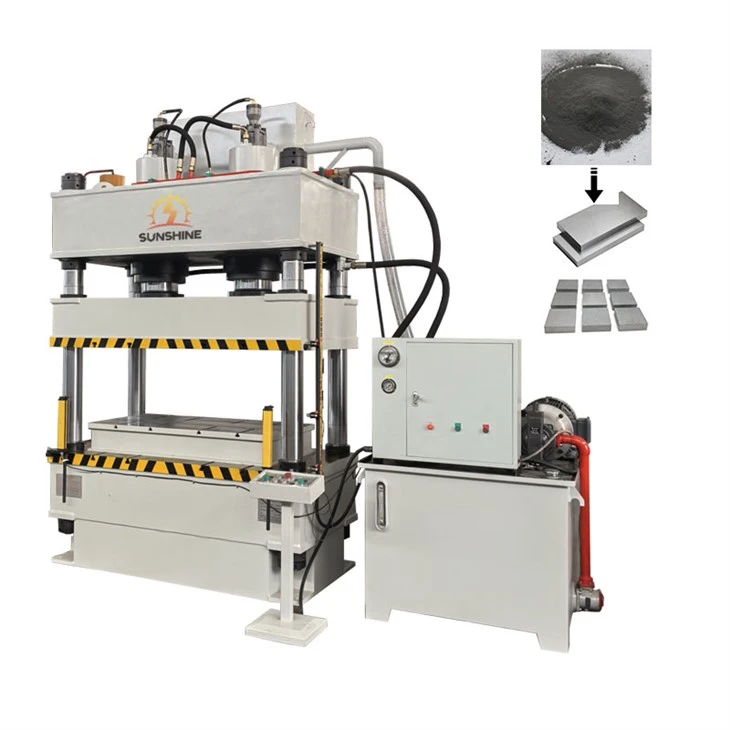

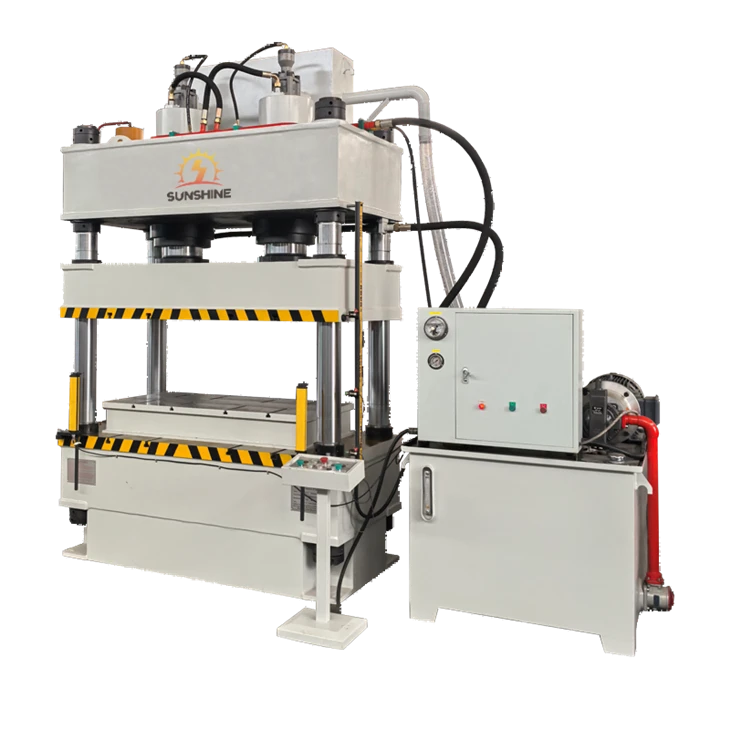
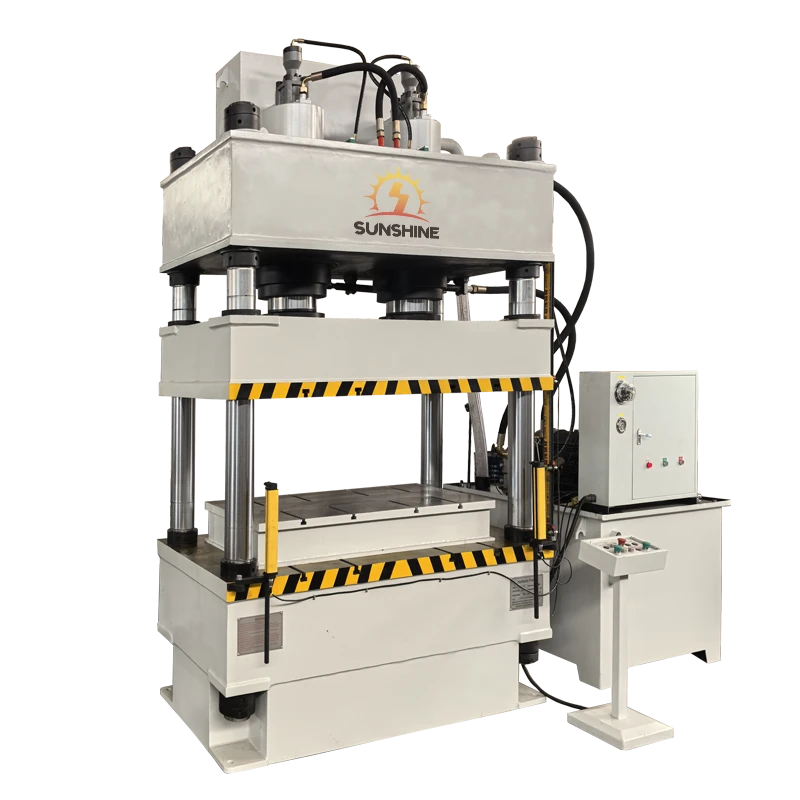
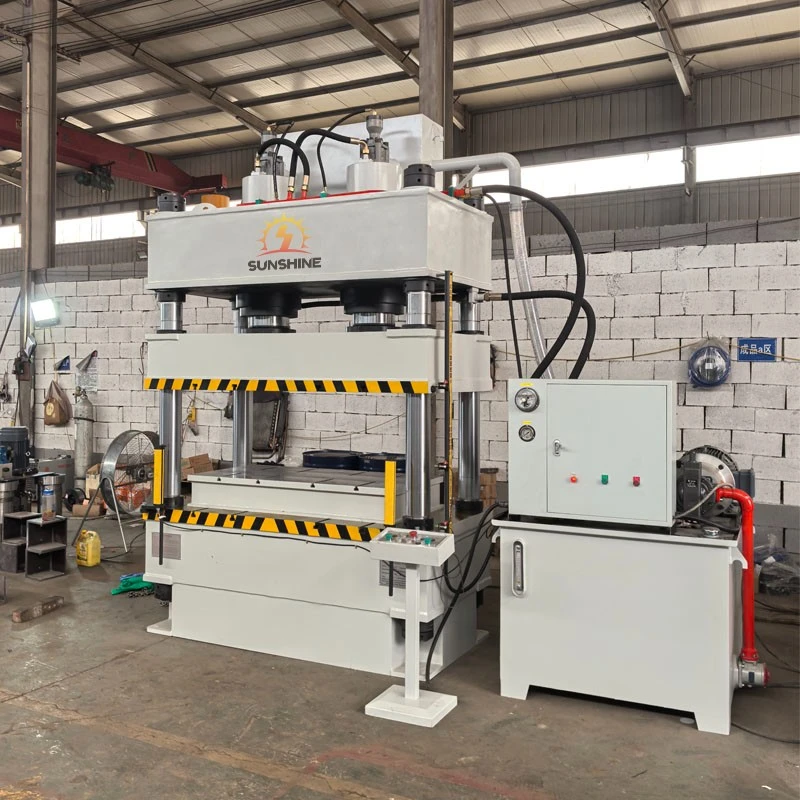
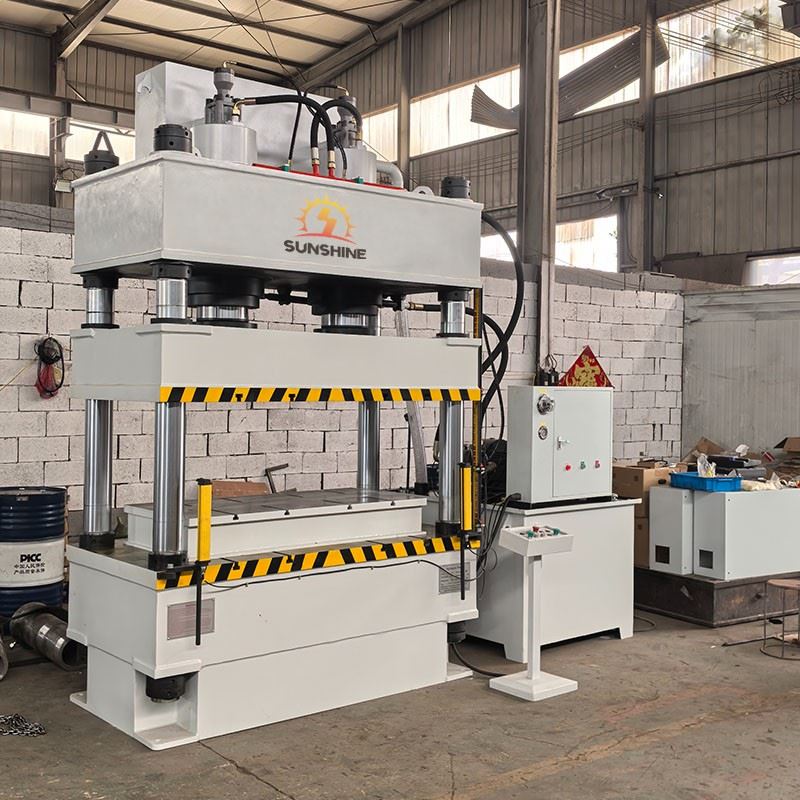
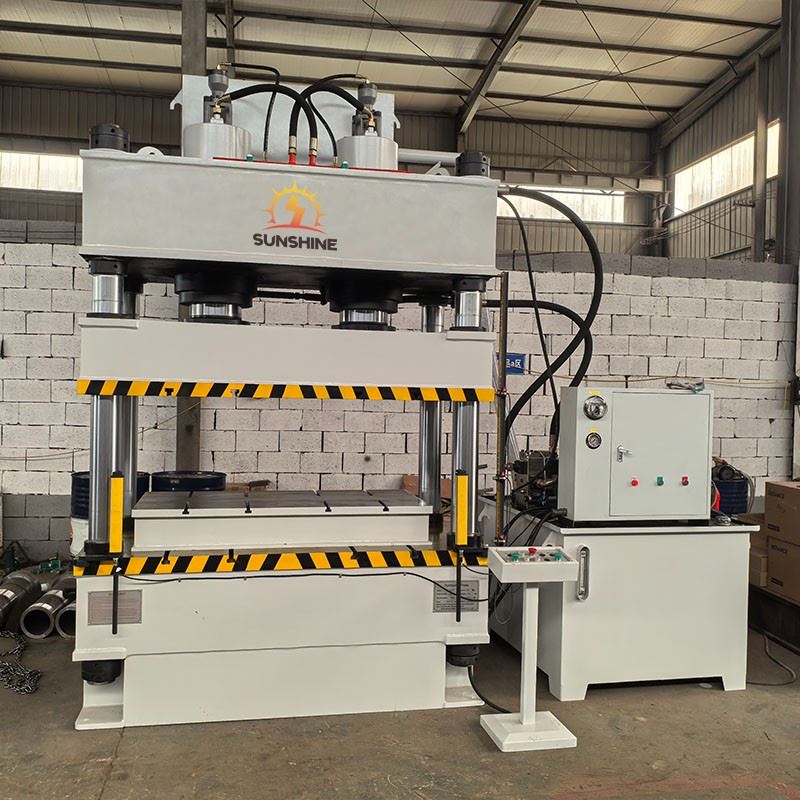
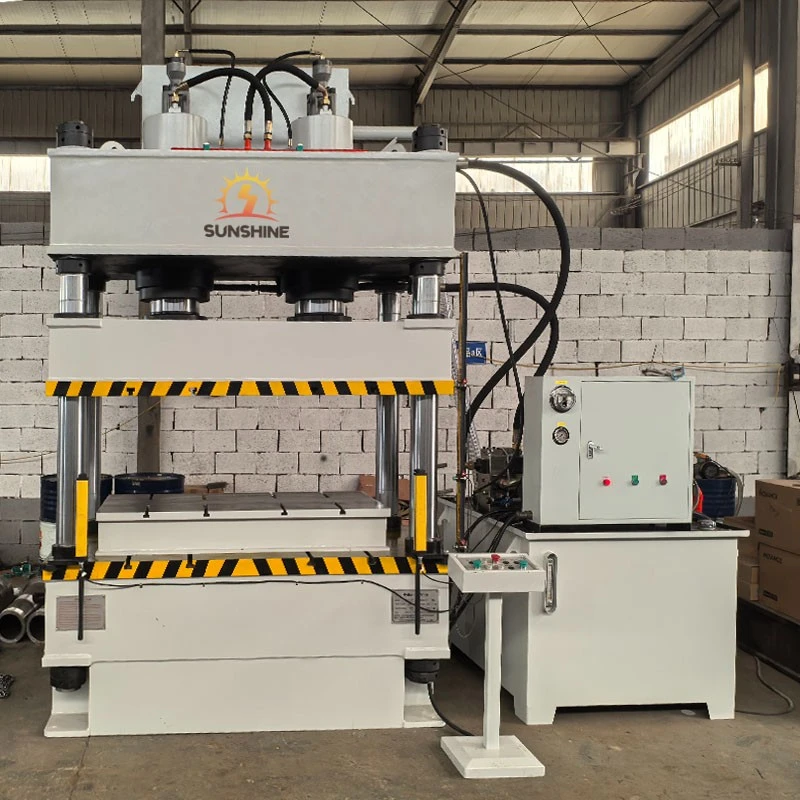
Hydraulic Press For Tungsten Powder Compacting
If you are in need of hydraulic press for tungsten powder compacting to help with your business, please rest assured to wholesale with us. We are one of the leading such manufacturers and suppliers in China with over 20 years' history. And the customized service is also available.
A hydraulic press for tungsten powder compaction is designed for powder metallurgy applications. It uses a hydraulic system to apply controlled pressing force to tungsten powder or tungsten-based powder mixtures placed in a mold. The powder is compressed into a green compact with a defined shape, size, and density, ready for subsequent processes such as sintering, precision machining, or other finishing operations.
Tungsten has a high density, a high melting point, and significant hardness, so the compaction process requires careful control of several factors. These include mold design, pressing pressure, holding time, powder fill volume, and the method used to eject the compact from the mold. The hydraulic system allows pressing parameters to be adjusted according to the powder properties, part geometry, and target compact density. This makes the equipment suitable for producing powder metallurgy components in various shapes and sizes.
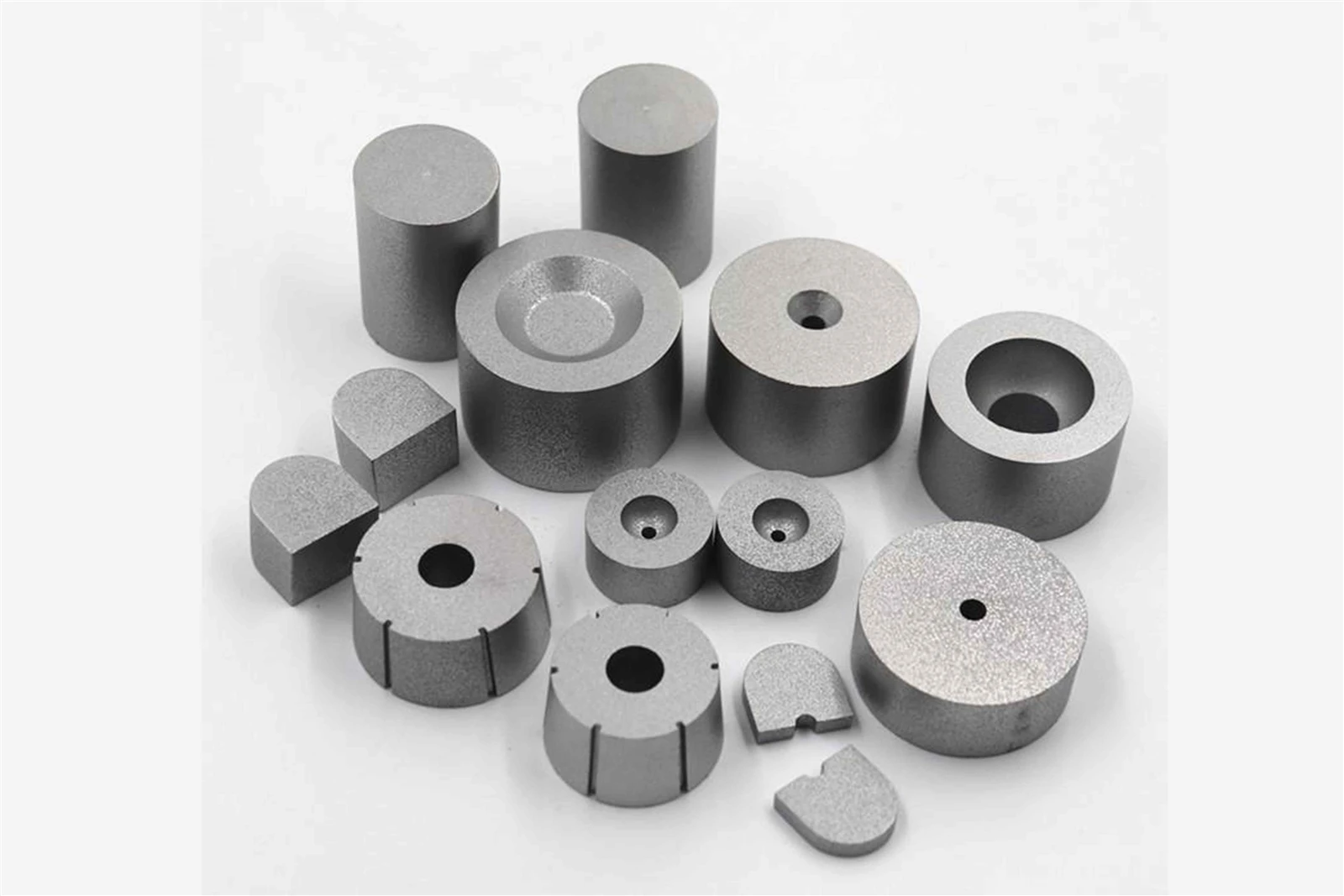
Depending on the final product, tungsten-based powder materials generally fall into two main categories:
1. Tungsten-Based High-Density Counterweights and Tungsten Alloy Components
These materials typically contain 90%–97% tungsten by weight, with the remaining 3%–10% consisting of metallic binder powders such as nickel, iron, or copper. Common formulations include 90W, 92.5W, and 95W. For example, a 95W alloy may contain 95% tungsten, 3.5% nickel, and 1.5% iron by weight.
During subsequent liquid-phase sintering, the binder metals help form a continuous metallic phase, improving the toughness of the finished component and reducing the risk of brittle cracking associated with pure tungsten.
2. Cemented Carbide Blanks (Tungsten Carbide–Cobalt, or YG Series)
These materials typically contain 85%–94% tungsten carbide (WC) by weight, combined with 6%–15% metallic cobalt powder, which acts as the binder phase. The cobalt binder contributes to the material's toughness and impact resistance, while the tungsten carbide phase provides hardness and wear resistance.
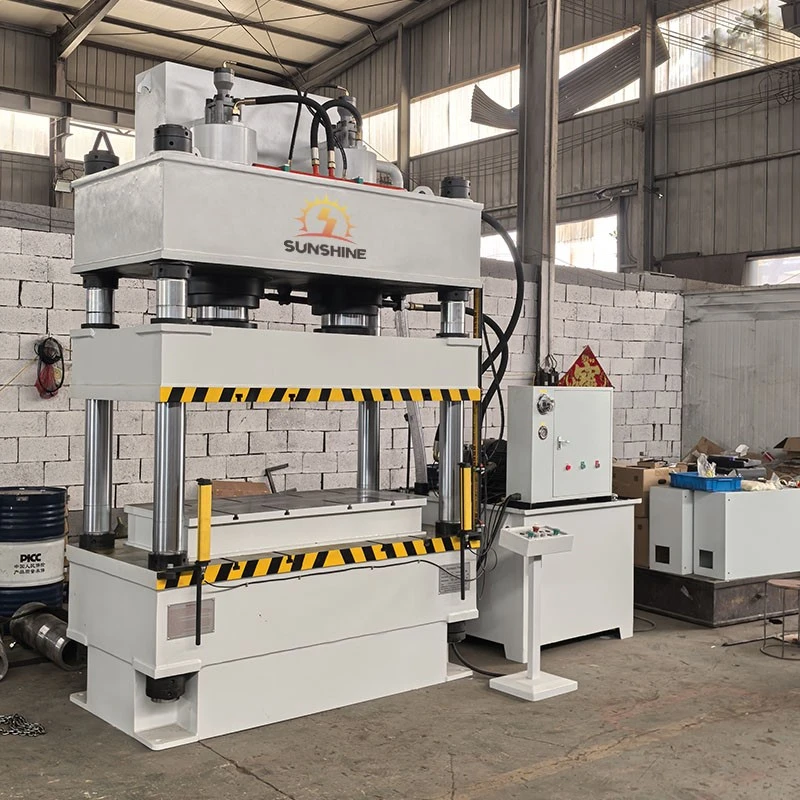
Hydraulic presses for tungsten powder compaction can be used with pure tungsten powder, tungsten carbide powder, and other tungsten-containing powder mixtures, depending on the manufacturing process. Models with capacities ranging from 100 to 630 tons are available. The appropriate press capacity can be selected based on the workpiece dimensions and the required compaction density.
| Technical Parameters | Y32-100T | Y32-200T | Y32-250T | Y32-315T | Y32-500T | Y32-630T | |
| Nominal pressure(KN) | 1000 | 2000 | 2500 | 3150 | 5000 | 6300 | |
| System pressure(Mpa) | 25 | 25 | 25 | 25 | 25 | 25 | |
| Slider stroke(mm) | 260 | 500 | 500 | 500 | 700 | 800 | |
| Maximum opening height(mm) | 440 | 800 | 720 | 800 | 1000 | 1300 | |
| Effective size of workbench(mm) | The left and right sides | 640 | 720 | 720 | 800 | 1400 | 1400 |
| The front and rear sides | 550 | 700 | 700 | 700 | 1400 | 1400 | |
| Slider speed(mm/s) | ldle stroke | 120 | 120 | 120 | 120 | 120 | 120 |
| Feeding | 14 | 14 | 14 | 14 | 15 | 12 | |
| Back tracking | 72 | 72 | 65 | 69 | 130 | 130 | |
| Ejection force(KN) | - | - | - | - | 630 | 1000 | |
| under cylinder stroke(mm) | - | - | - | - | 260 | 320 | |
| Motor power(KW) | 5.5 | 11 | 11 | 15 | 22×2 | 22×2 | |
Main Applications
The hydraulic press for tungsten powder compaction is primarily used to compress powder materials into green compacts of specific shapes and dimensions. These compacts are then sintered to achieve the required density and material properties.
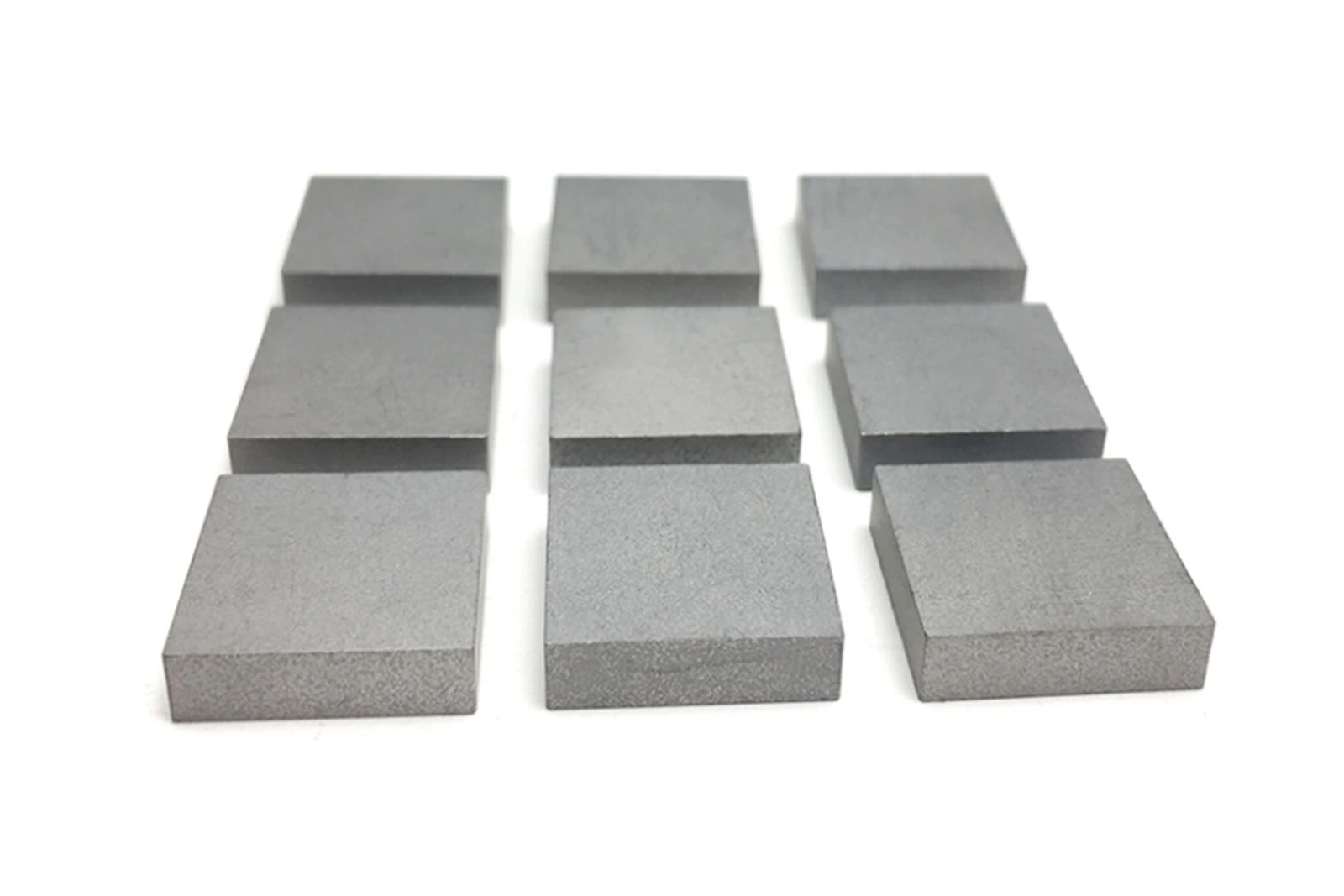
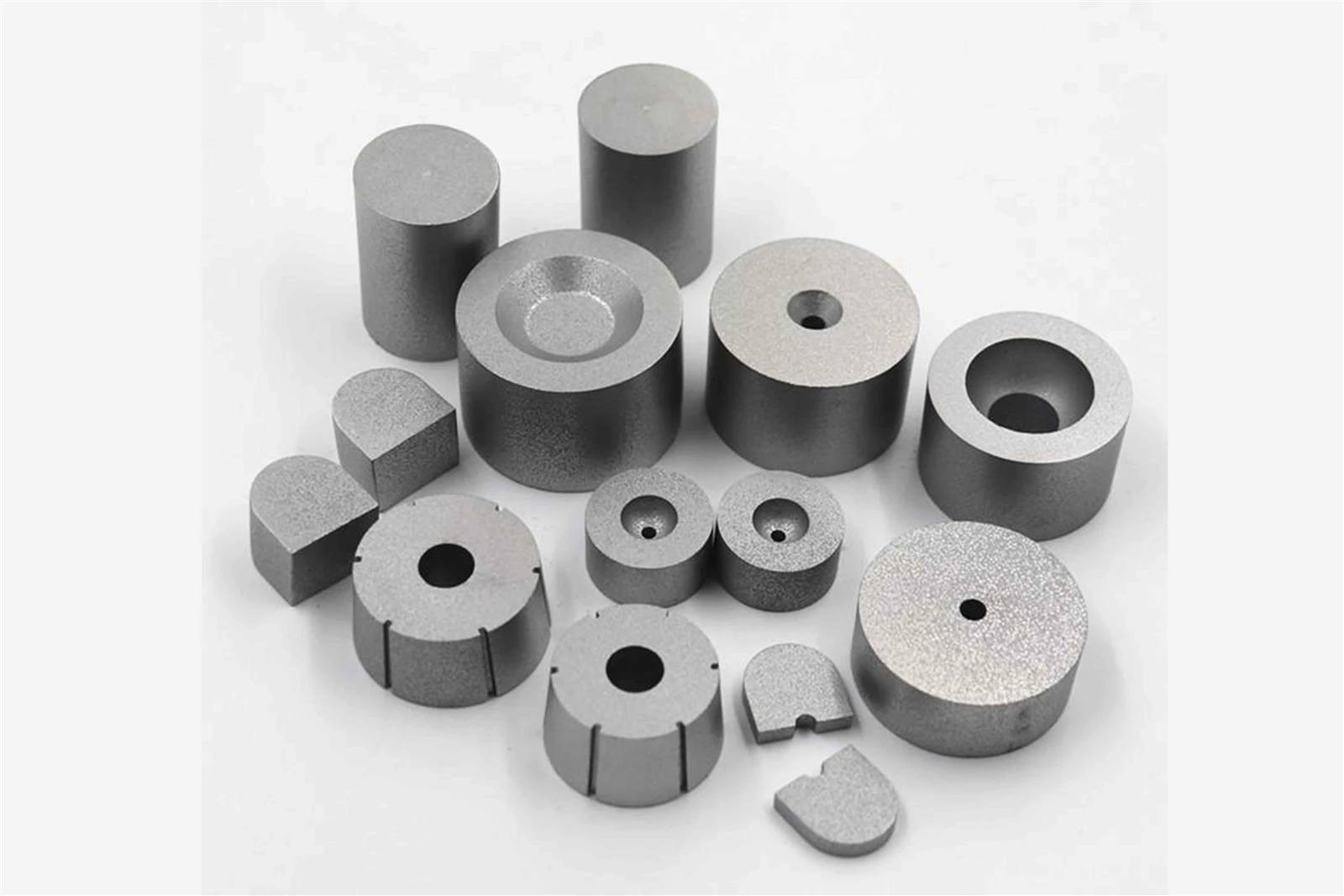
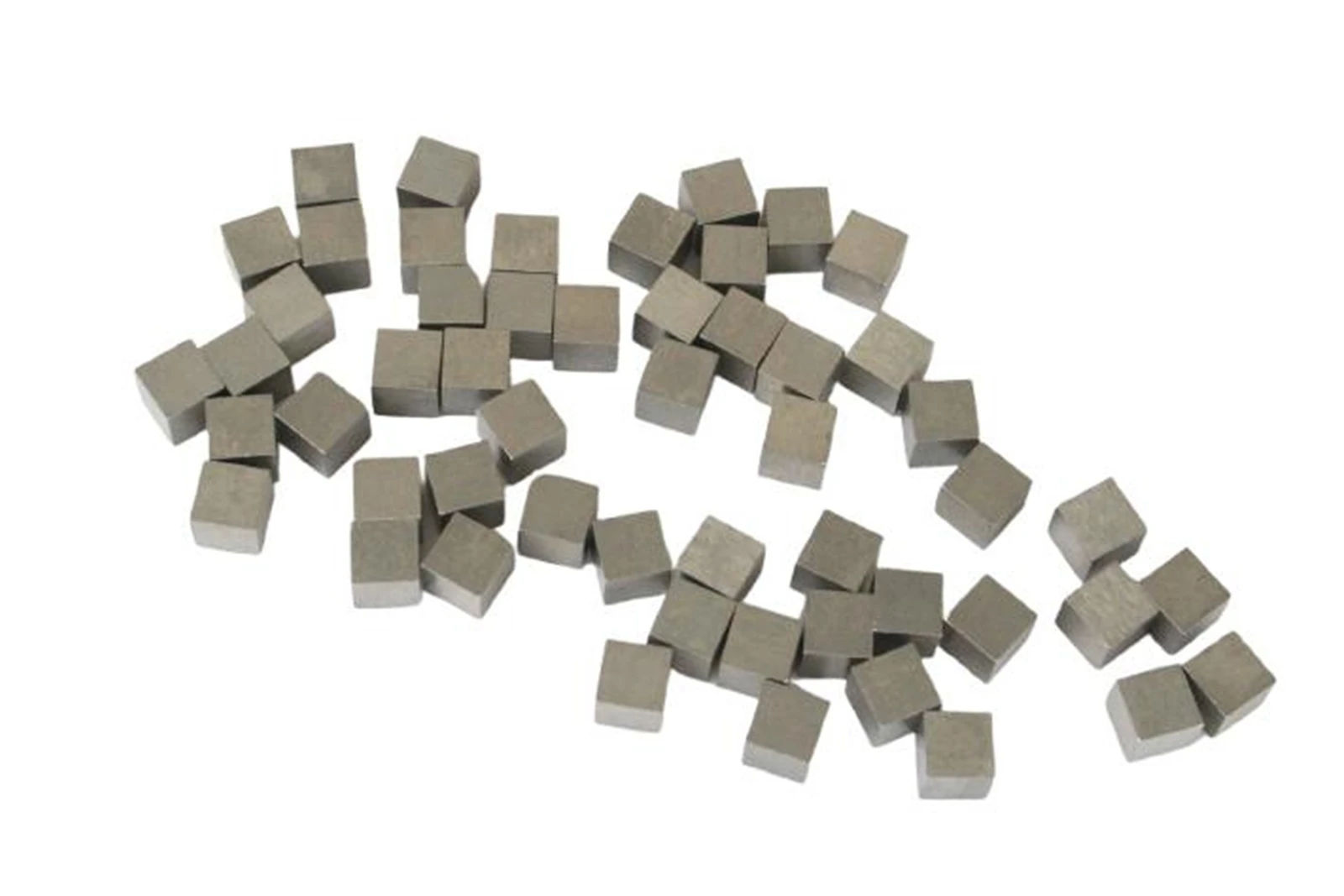
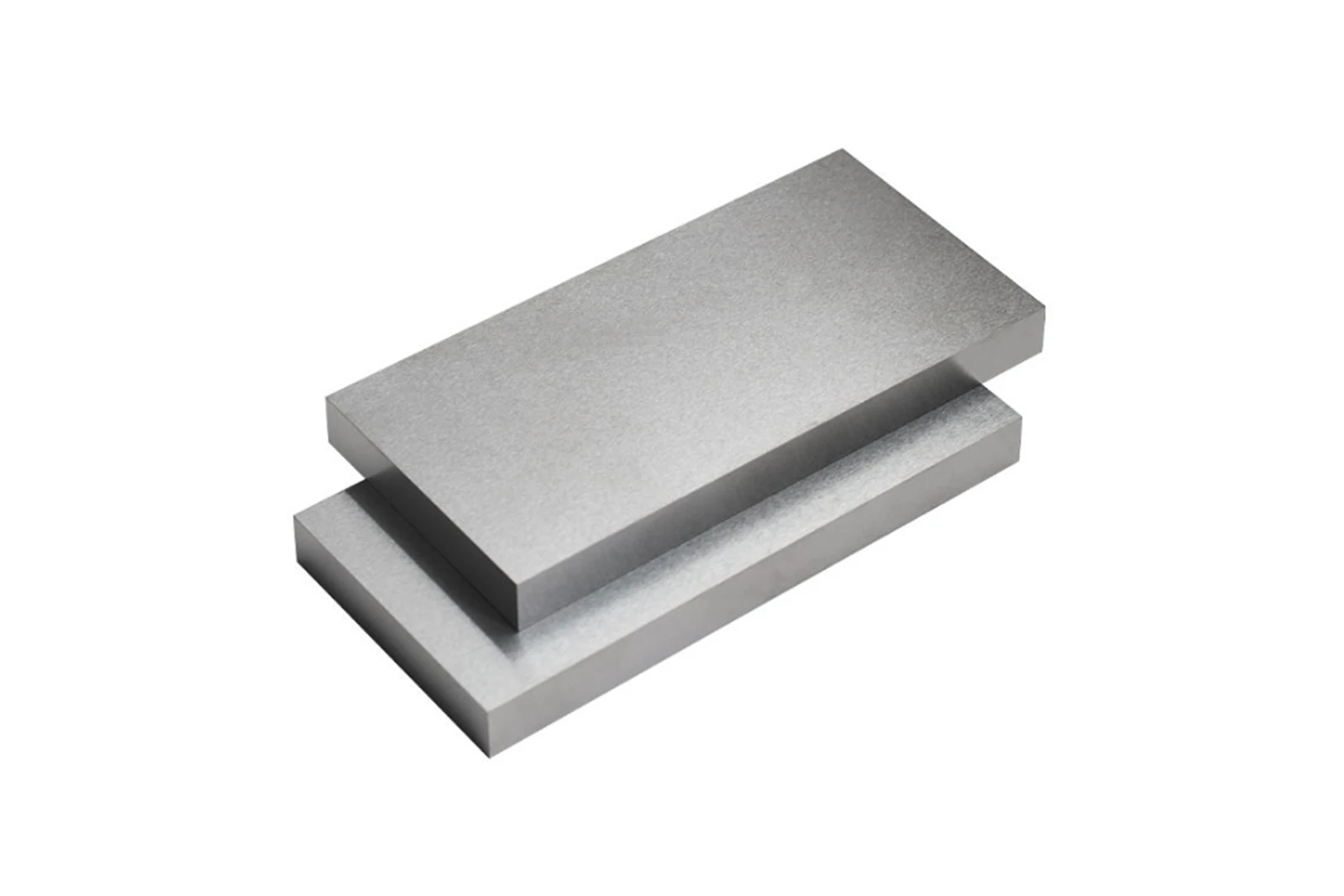
Tungsten and tungsten alloy compacts: Used to produce cylindrical, block-shaped, ring-shaped, and other components suitable for powder compaction in a mold.
High-density tungsten alloy parts: Suitable for producing components from tungsten powder mixed with nickel, iron, or other metallic binders. The material composition and forming process depend on the requirements of the finished product.
Tungsten carbide products: Used to compact powder mixtures for cemented carbide production. The press configuration must be matched to the powder formulation, mold design, and production requirements.
Multi-Cavity Molds for Producing Multiple Tungsten Compacts in One Cycle
This hydraulic press for tungsten powder compaction supports custom multi-cavity tooling, allowing multiple green (unsintered) tungsten compacts to be formed in a single pressing cycle. This setup is suitable for high-volume production of small tungsten components.
The tooling can be customized with 4, 6, 8, or more cavities, depending on the workpiece dimensions. In general, larger parts require fewer cavities per mold.
This hydraulic press for tungsten powder compaction is compatible with a range of powder-forming molds, including single-action molds, double-action molds, floating-die molds, and multi-step composite molds. Depending on the application, the molds can be made from cemented carbide (tungsten carbide-based hardmetal), high-alloy tool steel, or composite structures with inserts.
Our hydraulic powder-compacting presses are equipped with an automatic feeding system that fills the mold cavities with tungsten powder in a controlled and consistent manner. This helps maintain uniform powder distribution and reduces variations in part weight and local density that can occur with manual filling. Consistent filling is important for maintaining stable part quality in continuous powder-compaction production.
After pressing, an automatic ejection mechanism releases the compacted parts from the molds, reducing the need for manual handling. This helps prevent surface damage, including dents, chipped edges, and cracks, that may occur when handling rigid green compacts. The ejection speed can also be adjusted according to the workpiece thickness and the strength of the green compact. This helps reduce the risk of cracking during demolding, particularly when producing thin-walled or complex-shaped tungsten components.
Supporting Services and Delivery Capabilities
We provide technical support for tungsten powder compaction, from initial process planning to equipment installation and production trials. Our services include assessing component feasibility, calculating the required compaction pressure, advising on powder formulations, designing and manufacturing multi-cavity molds, commissioning the equipment, conducting on-site trial production, and training operators.
Based on your product drawings and requirements for tungsten powder compacts, we can design and manufacture molds for different pressing methods, including single-action, double-action, floating-die, and multi-cavity configurations. Available mold materials include alloy tool steel and cemented carbide inserts, depending on the application.
Before shipment, we can carry out trial pressing using your actual powder material to evaluate the forming results. The trials help assess green compact quality, including density uniformity and the risk of defects such as delamination, so that any necessary adjustments can be made before the equipment is put into production.
FAQ
Q1: Can a hydraulic press for tungsten powder compaction be used with pure tungsten powder?
Yes. It can be used to compact pure tungsten powder. However, the appropriate process parameters depend on factors such as powder particle size and morphology, filling quantity, target green density, and the shape and structure of the component.
Q2: What tonnage is required for a hydraulic press used for tungsten powder compaction?
The required tonnage depends on the specific product and pressing process. It is generally calculated based on the compaction area and required pressing pressure, with consideration given to mold load limits, product height, and the machine's available working space. Providing product drawings and process requirements will help us recommend a suitable press.
Q3: Is the final product ready for use immediately after tungsten powder compaction?
Generally, no. The green compact is the pressed powder part before sintering. For most tungsten and tungsten alloy powder products, further processing, such as sintering, is required to achieve the desired density, strength, and mechanical properties. The final dimensions may also change due to shrinkage during sintering.
Q4: Can one hydraulic press produce tungsten powder components in different sizes?
Yes, provided the machine has sufficient working space and pressing capacity for the different products. Changing the mold allows the same press to produce components in various sizes and shapes. However, differences in component dimensions, required pressing pressure, and ejection methods may require different mold designs.
Q5: Can a multi-cavity mold cause density variations between individual tungsten compacts?
Density variations can occur if powder filling or pressure distribution differs between cavities. A suitably designed floating multi-cavity mold, combined with appropriate press control and process settings, can help improve consistency between individual compacts. Actual weight and density variations depend on the powder properties, mold design, and pressing conditions. The results should be verified through trial production against the required specifications.
Q6: Can this hydraulic press produce tungsten components in shapes other than blocks?
Yes. By changing the mold, the same press can produce cylindrical, ring-shaped, and stepped tungsten compacts, provided the mold design and machine capacity are suitable for the application. Different process parameters can be stored for individual products, making it easier to switch between production runs.
Hot Tags: hydraulic press for tungsten powder compacting, China, suppliers, manufacturers, wholesale, customized, base four column hydraulic press, cardboard four column hydraulic press, cylinder head four column hydraulic press, forging four column hydraulic press, Longmen Frame Hydraulic Press, unloading four column hydraulic press
Send Inquiry
