

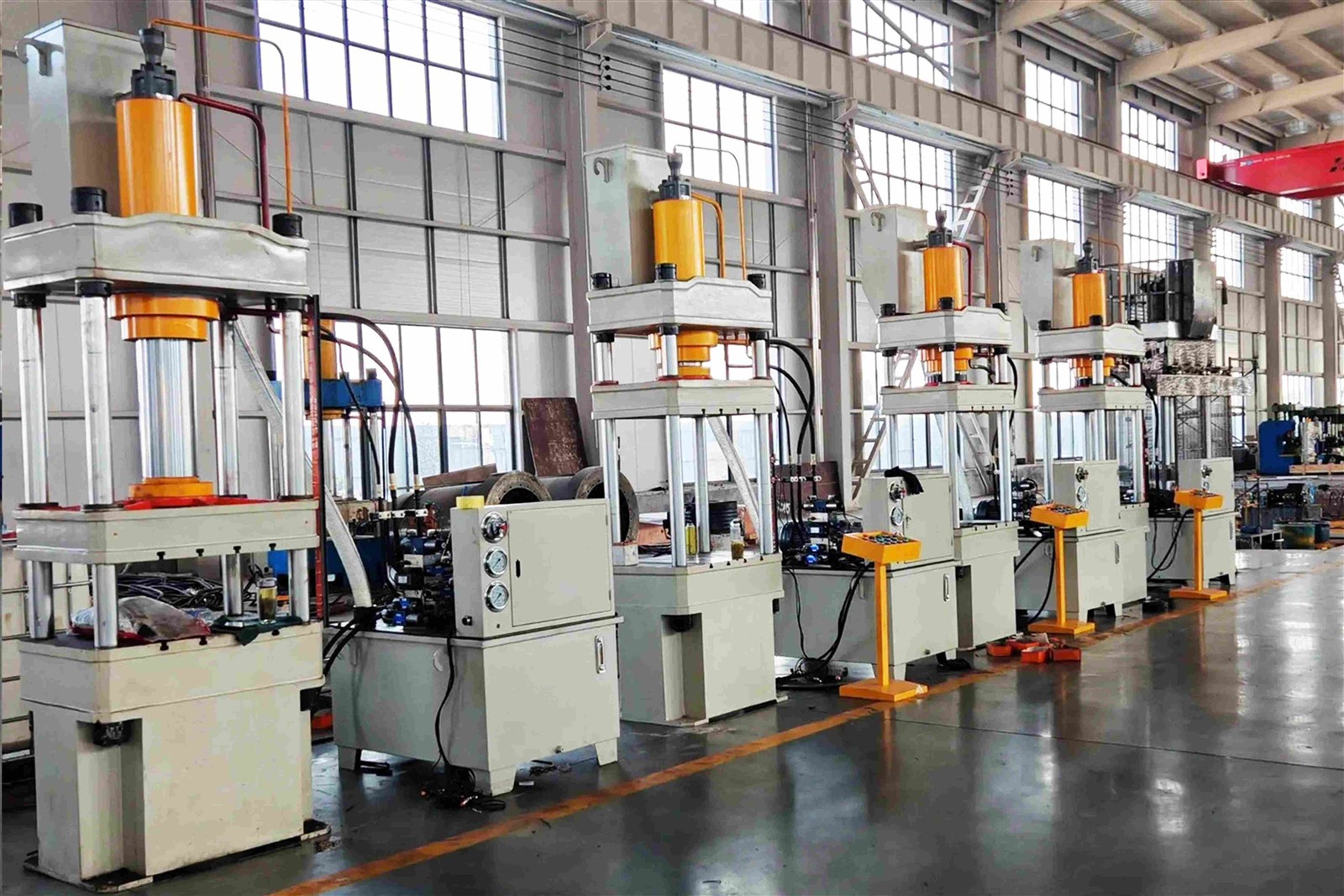
Shandong Sunshine Machinery Co., Ltd. was established in 1996 and is one of the leading companies in the automotive parts industry in mainland China. The company boasts strong research and development capabilities, advanced production equipment, and strict testing methods. It focuses on the research, development, and manufacturing of CNC vertical lathes, hydraulic presses, and automotive assembly equipment. Our main products include CNC vertical lathes, vertical machining centers, horizontal machining centers, five-axis machining centers, hydraulic presses, sawing machines, and other related mechanical equipment.
We regard product quality as the lifeblood of the enterprise and use this as our guiding principle to achieve our common goals: high precision, high efficiency, and high rigidity.
The company has a solid customer base worldwide, including regions such as Europe, Bangladesh, Vietnam, South Korea, Saudi Arabia, India, Australia, Africa, and Nigeria.
We are committed to providing customers with excellent quality and service to ensure the best cost-effectiveness and professional support in the global market. We sincerely look forward to the opportunity of cooperating with you.
-

Four-column Hydraulic Press For Fish Bait Block Molding
A fish bait powder forming hydraulic press is a specialized hydraulic machine used to compress fish bait powder or granular materials into specific shapes (such as blocks or discs). Its core function Add to Inquiry -
315 Ton Hydraulic Press
Y32-315T Four-Column Hydraulic Press for Powder FormingFeaturing a modular design and a cartridge valve system, this machine is engineered specifically for large-scale industrial pressing Add to Inquiry -
Hydraulic Press Machine 300 Ton
300T Wheelbarrow Forming Hydraulic PressThis is a 300 ton hydraulic press machine designed specifically for the molding of wheelbarrows, featuring a three-beam, four-column structural configuration. Add to Inquiry -
500T Hydraulic Press
This is a 500t hydraulic press designed for forming mineral blocks for cattle and sheep. It is specifically engineered to precisely blend mineral elements, vitamins, trace elements, and other Add to Inquiry -
Discount Metal Ware Stretch Forming Hydraulic Press
250T Metal Ware Stretch Forming Hydraulic PressStructure: Three-beam, four-column design; CO₂-welded steel plate frame.Process: Post-weld tempering and vibration stress relief ensure the frame Add to Inquiry -
500T Double-cylinder Four-column Hydraulic Press
Utilizing independent hydraulic power and electrical control systems, the equipment supports three distinct operating modes—adjustment, manual, and semi-automatic—thereby ensuring stable and Add to Inquiry -
200T Four Column Hydraulic Press
200T Four Column Hydraulic PressThe hydraulic press has a three-beam four-column hydraulic press with galvanized sheet as the base plate, the workbench and slider are integral 45# cast steel, the Add to Inquiry -
500 Tons Four-pillar Salt Brick Machine
The 500-ton four-column salt brick machine has a four-beam and four-column structure, equipped with special powder transfer and hydraulic proportional floating forming technology, so that the forming Add to Inquiry -
500T Four-column Hydraulic Press With Servo System
Compared to traditional hydraulic presses, the 500-ton four-column servo hydraulic press offers significant energy savings. Depending on the processing technology and production cycle, servo-driven Add to Inquiry -
Hydraulic Press SMC Material Molding Press Machine
SMC molding machine is also called FRP hydraulic molding machine, suitable for molding SMC, BMC, FRP, GRP, GMT and other composite materials. Machine parameters such as table size, opening, stroke, Add to Inquiry -
100T Four-column Hydraulic Press Machine
★The Y32 series hydraulic press is a general-purpose pressing equipment suitable for pressing plastic materials, powder molding, plastic product molding, cold (hot) extrusion metal forming, sheet Add to Inquiry -
Hydraulic Press for Press Forming of SMC Products
FRP product hydraulic presses are used for both thermosetting and thermoplastic material molding. They are primarily used for composite materials such as SMC, BMC, DMC, GMT, and LFT-D. The speed and Add to Inquiry




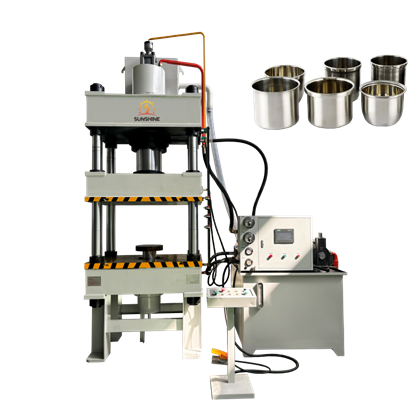


What is Four Column Hydraulic Press
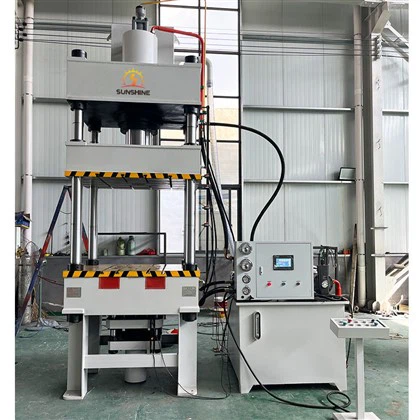
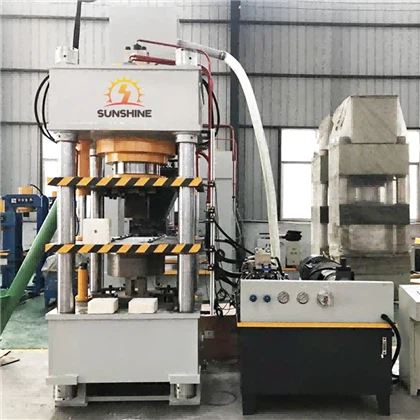
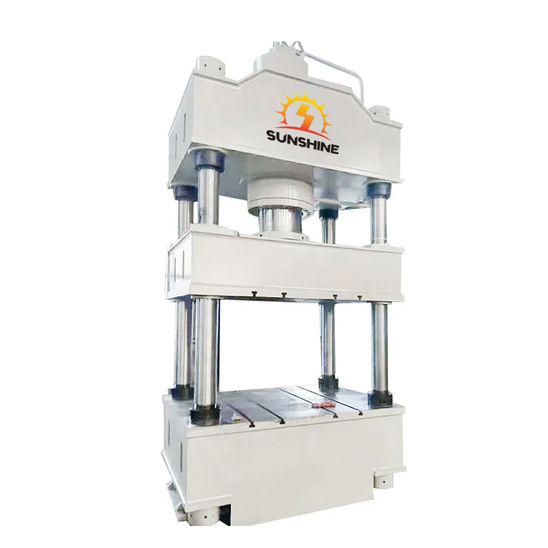
A four column hydraulic press is a type of industrial machine used for compressing materials. It is a large, heavy-duty machine that uses hydraulic fluid to generate force, which is then used to press materials together. The machine typically consists of four columns, which support the upper and lower platens, the surfaces that come into contact with the materials being pressed. The hydraulic press is commonly used in industries such as automotive, aerospace, and metalworking, where it is used to shape, form, or join metal parts.
Advantages of Four Column Hydraulic Press
Compact structure
The structural design of the four-column hydraulic press makes it occupy a smaller area and is more compact than other types of pressure equipment. This makes the four-column hydraulic press particularly suitable where space is limited.
Easy to operate
The four-column hydraulic press adopts hydraulic transmission, which makes the operation of the equipment very simple. With just one operation panel, key parameters such as pressure and stroke of the equipment can be precisely controlled, reducing the technical requirements for operators.
Adjustable pressure
The pressure of the four-column hydraulic press can be adjusted according to actual needs. Users can set appropriate pressure values according to different workpieces and process requirements.
High work efficiency
The four-column hydraulic press has high pressure transmission efficiency, allowing the workpiece to reach the required pressure value in a short period of time. In addition, the stroke speed of the four-column hydraulic press is adjustable, which can further improve production efficiency.
Why Choose Us
High quality
Our products are manufactured or executed to very high standards, using the finest materials and manufacturing processes.
Rich experience
Dedicated to strict quality control and attentive customer service, our experienced staff is always available to discuss your requirements and ensure complete customer satisfaction.
Quality control
We have professional personnel to monitor the production process, inspect the products and ensure that the final product meets the required quality level standards, guidelines and specifications.
24h online service
We try and respond to all concerns within 24 hours and our teams are always at your disposal in case of any emergencies.
Types of Four Column Hydraulic Press
Desktop hydraulic press
A desktop hydraulic press is a compact piece of equipment designed for use in office and laboratory environments. This hydraulic press usually has two or four columns and can provide small and medium-sized pressure. While they may not be as powerful as other larger hydraulic presses, they are excellent at handling lightweight materials such as stamping, creasing, assembly, and packaging.
Standard hydraulic press
A standard hydraulic press is a device with four columns and one cylinder that can provide greater pressure. This type of hydraulic press is commonly used in volume production environments such as the automotive manufacturing, aerospace, construction materials and packaging industries. Standard hydraulic presses have high pressure capabilities and large working areas to handle a variety of heavy-duty materials.
Large hydraulic press
Large hydraulic presses are equipment with very high pressure capabilities and are suitable for handling extremely heavy materials. This kind of hydraulic press usually has four columns and a large cylinder that can provide extremely high pressure. They are mainly used in heavy industrial production processes such as forging, pressing and cutting. Large hydraulic presses have huge structures and powerful forces, and can handle metal sheets up to tens of meters long and pressed parts of hundreds of tons.
Customized hydraulic presses
Customized hydraulic presses are hydraulic presses designed and manufactured in a non-standardized manner according to specific process requirements, production environment, technical parameters or special functional requirements. From machine structure, tonnage, stroke, speed, control method to auxiliary functions, they are all developed in a "tailor-made" manner to meet special application scenarios that conventional hydraulic presses cannot achieve or are inefficient.
How to Choose Four Column Hydraulic Press
Capacity and tonnage
The first consideration is the capacity and tonnage of the press. These two factors are interconnected and play a crucial role in determining the force that the press can apply. Capacity refers to the maximum size of the material that can be processed, while tonnage refers to the maximum force that the press can exert.
Stroke and speed
Another important factor to consider is the stroke and speed of the press. The stroke refers to the distance that the press ram travels when it is in operation, while the speed refers to how quickly the ram moves.
Press bed and table size
The press bed and table size are essential factors to consider, as they directly impact the size of the material that can be processed. The press bed is the horizontal surface on which the material is placed, while the table size refers to the dimensions of the tabletop.
Hydraulic system and controls
The hydraulic system and controls of a four-column hydraulic press are crucial for ensuring optimal performance. The hydraulic system is responsible for generating the force required to operate the press, while the controls allow you to regulate the press's functions.
Safety features
Safety is a crucial consideration when purchasing a four-column hydraulic press. Accidents can occur during operation, resulting in injuries or damage to equipment.
Price and manufacturer
Finally, it is essential to consider the price and the manufacturer of the press. The price of a four-column hydraulic press can vary greatly depending on the capacity, tonnage, and features included.
Application of Four Column Hydraulic Press
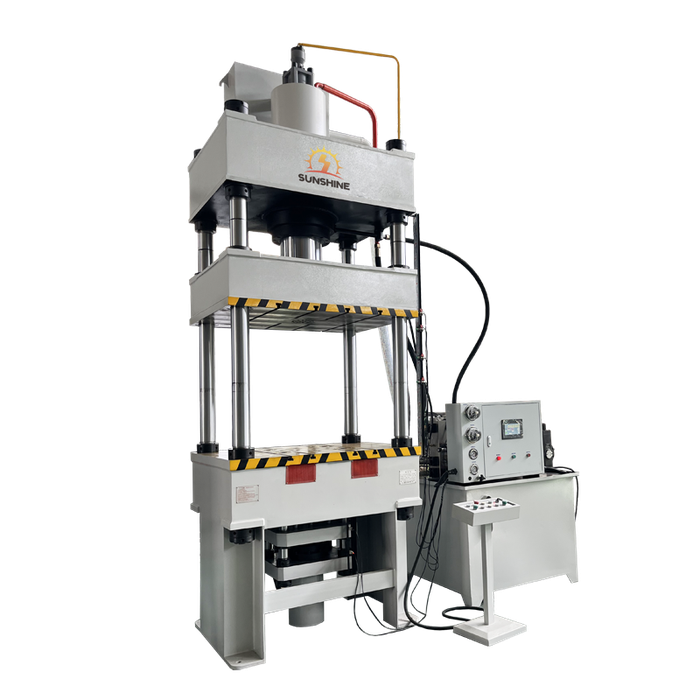
Metal forming and stamping
One of the primary applications of a four-column hydraulic press is metal forming and stamping. This process involves shaping metal sheets into various forms using dies. The hydraulic press applies pressure on the metal sheets, which forces them to conform to the shape of the dies. This process is commonly used in the automotive industry to produce body parts, such as doors, hoods, and fenders. It is also used in the production of home appliances, office equipment, and other metal products.
Sheet metalworking
A four-column hydraulic press is an essential tool in sheet metalworking. It is used to punch holes, cutouts, and shapes in metal sheets. The machine can also be used to form and shape metal components, such as brackets, clips, and fasteners. In the electronics industry, it is used to produce components like printed circuit boards and metal enclosures. The press is also used in the construction industry to make metal roofing, flashing, and trim.
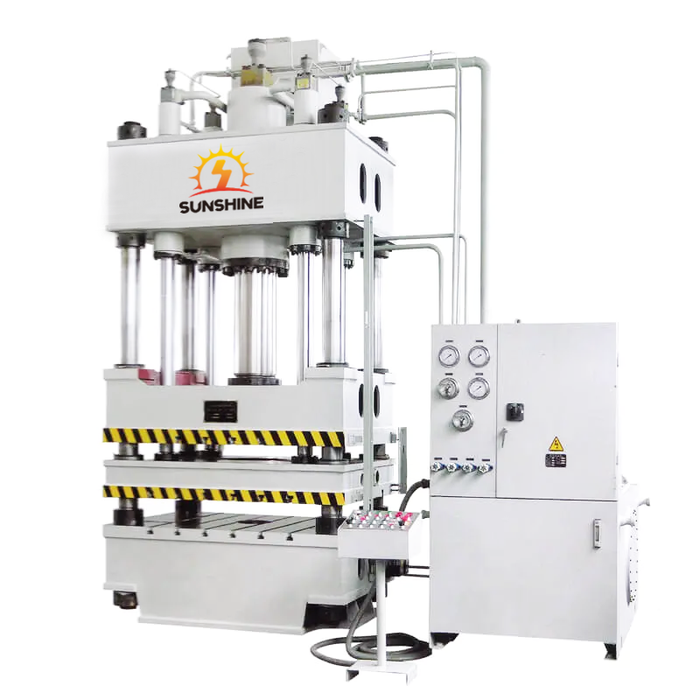

Plastic injection molding
A four-column hydraulic press is also used in the plastic industry for injection molding. In this process, molten plastic is injected into a mold, which is then compressed by the hydraulic press to form a desired shape. This method is used to produce a wide range of plastic products, such as toys, containers, packaging, and automotive parts. The press plays a crucial role in ensuring that the plastic is uniformly distributed within the mold, resulting in a consistent and high-quality product.
Composite material manufacturing
Four-column hydraulic presses are also used in the production of composite materials. Composites are materials made from two or more different materials, such as fiberglass, carbon fiber, and kevlar. These materials are combined to create a strong, lightweight material with a variety of applications. For example, they are used in the aerospace industry to make aircraft components, such as wings and fuselages. They are also used in the automotive industry to produce lightweight components, such as car bodies and doors. The hydraulic press is used to compress and mold the composite materials into their desired shapes and sizes.

Things to Note When Using Four Column Hydraulic Press
Safety first
Using a four-column hydraulic press involves working with high-pressure fluids and heavy-duty machinery. Safety must be the top priority. Ensure that the machine is properly maintained and regularly inspected. Check for any leaks, worn out parts, or damaged components. Always wear the necessary personal protective equipment (ppe), such as safety goggles, gloves, and earplugs. It is also essential to follow the manufacturer's guidelines and the local safety regulations.
Operation procedures
Operating a four-column hydraulic press requires following specific procedures. Ensure that the machine is turned on and properly heated before use. Check the pressure gauge and oil level regularly to ensure they are within the specified range. When operating the machine, do not exceed the maximum allowable pressure or try to force the material beyond its capacity. This can lead to damage to the machine or even personal injury.
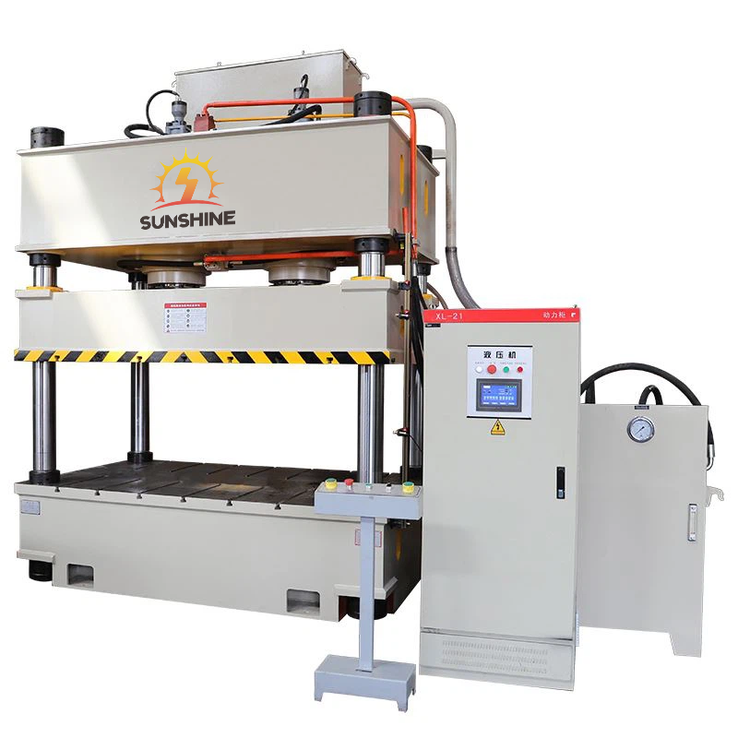
Proper setup
Before using the hydraulic press, ensure that the setup is correct. This includes checking the worktable, dies, and tools to ensure they are compatible and properly aligned. The worktable should be clean and free from any debris. The dies and tools should be securely fixed to the table to prevent any movement during operation. Additionally, make sure the hydraulic press is securely bolted to the floor to prevent any movement or instability.
Emergency response plan
In case of an emergency, it is crucial to have an emergency response plan in place. This should include knowing the location of the emergency stop button, fire extinguisher, and first aid kit. Ensure that all employees are trained in emergency procedures and know how to respond in case of an accident. Regular drills and simulations can help employees become more familiar with the emergency response plan and improve their response time.
Components of Four Column Hydraulic Press
Columns
The columns of a four-column hydraulic press are its most prominent feature and provide the structure for the entire machine. They are usually made of high-quality steel and are designed to support the weight of the press and the materials being processed. The columns are arranged in a square formation, with two columns on each side of the press bed, and a central column running down the middle.
Press bed
The press bed is the flat surface on which the materials are placed during processing. It is typically made of hardened steel or cast iron and is designed to withstand the high pressures applied by the hydraulic system. The press bed is mounted on the columns and is movable, allowing it to move up and down and apply pressure to the materials.
Hydraulic system
The hydraulic system is the heart of a four-column hydraulic press, responsible for generating the immense pressure required for processing materials. It consists of several components, including hydraulic pumps, valves, cylinders, and reservoirs.
Control panel
The control panel is an essential component of a four-column hydraulic press, allowing the operator to control the machine's functions and monitor its performance. It typically consists of a series of buttons, dials, and gauges that enable the operator to adjust the pressure, control the movement of the press bed, and monitor various aspects of the.
How to Maintain Four Column Hydraulic Press
1. Regular inspection and maintenance
Performing regular inspections and maintenance on a four-column hydraulic press is crucial to ensuring its longevity and optimal performance. This includes checking for any signs of wear and tear on the machine, such as cracks or leaks in the hydraulic system, worn out seals, or damaged components. It is also important to inspect the machine's frame for any signs of deformation or damage.
2. Lubrication
Proper lubrication is essential for the smooth operation of a four-column hydraulic press. All moving parts, such as the hydraulic cylinders and the mechanical components, should be lubricated regularly to reduce friction and prevent wear. It is important to use the correct type of lubricant for the press, as using the wrong lubricant can cause damage to the machine's components.
3. Safety measures
Safety should always be a top priority when working with a four-column hydraulic press. This includes following all safety procedures and wearing the necessary personal protective equipment, such as safety glasses, gloves, and ear plugs. It is also important to ensure that the machine is equipped with all the necessary safety features, such as emergency stop buttons, pressure relief valves, and guards.
4. Training and education
Proper training and education are essential for ensuring the safe and efficient operation of a four-column hydraulic press. All operators should receive comprehensive training on the machine's operation, safety procedures, and maintenance requirements. This training should include both classroom instruction and hands-on practical training.
Working Principle Four Column Hydraulic Press
A four column hydraulic press works by converting mechanical energy into hydraulic energy through the use of a hydraulic cylinder that moves a piston within a sealed chamber. The piston then forces hydraulic fluid through a series of valves and hoses into the press cylinder, which in turn applies pressure to the workpiece. The press is operated through a control panel that directs the hydraulic cylinders to apply and release pressure at precise intervals and pressures. The four columns provide stability and ensure that the press maintains an even distribution of force during the operation.This type of press is commonly used in metalworking, plastics processing, and other industrial applications.
Our Services?
We offer customized services and can design and process products based on customer requirements.
We provide processing solutions that effectively improve customer production capacity.
We have the capability to retrofit and repair old equipment, helping companies save costs.
We offer machine tool processing tools (based on the workpiece drawings).
We provide free testing of workpieces for processing.
Note: Our services require a deposit before production begins.
Our address
No. 831 Shangdu, Xingtan Road, Jinghe Street, Tengzhou City, Zaozhuang City, Shandong Province
Phone Number
+8618769237879
linna.sunshinemachinery@gmail.com

FAQ
Q: What is a four-column hydraulic press?
A: A four-column hydraulic press is a machine tool that uses hydraulic fluid to generate force and perform various types of material forming and metalworking processes. It is designed with four columns to provide stability and support during operation, making it suitable for high-precision and high-quality work.
Q: How does a four-column hydraulic press work?
A: A four-column hydraulic press works by using hydraulic fluid to generate pressure inside a cylinder. The pressure is then transferred to a piston, which in turn applies force to a movable plate. The movable plate is connected to a workpiece, and the force exerted on it causes the material to deform or change shape.
Q: What are the main applications of a four-column hydraulic press?
A: Four-column hydraulic presses are commonly used in various industries for applications such as punching, bending, pressing, and forming of metal sheets, plates, and other materials. They are also used for assembly operations, such as inserting components into another part, and for die-casting.
Q: What are the advantages of a four-column hydraulic press?
A: Four-column hydraulic presses offer several advantages, including high precision and repeatability, high production efficiency, easy operation and maintenance, and low energy consumption. They also provide a safe working environment due to their closed-loop operation and built-in safety features.
Q: What is the maximum force that a four-column hydraulic press can apply?
A: The maximum force that a four-column hydraulic press can apply depends on the size and capacity of the machine. Smaller presses can apply forces ranging from a few tons to several hundred tons, while larger presses can exert thousands of tons of force.
Q: How fast can a four-column hydraulic press move?
A: The speed of a four-column hydraulic press depends on the size and type of the machine. Smaller presses can move at speeds of a few inches per minute, while larger presses can move at several feet per minute. High-speed presses can reach speeds of up to 1,000 feet per minute.
Q: What are the different types of four-column hydraulic presses?
A: Four-column hydraulic presses can be categorized based on their construction, capacity, and operating principle. Some common types of four-column hydraulic presses include single-action, double-action, and cushion-type presses.
Q: What is the difference between a single-action and a double-action four-column hydraulic press?
A: A single-action four-column hydraulic press uses one cylinder to apply force, while a double-action press uses two cylinders. In a single-action press, the force is applied in one direction, while in a double-action press, the force can be applied in both directions.
Q: What is a cushion-type four-column hydraulic press?
A: A cushion-type four-column hydraulic press uses a special type of hydraulic fluid, called a cushion oil, to provide a soft landing for the workpiece after the force is applied. This type of press is commonly used for delicate operations, such as die-casting and embossing.
Q: How do you choose the right four-column hydraulic press for your application?
A: When choosing a four-column hydraulic press, you should consider factors such as the type and size of the workpiece, the required production rate, the accuracy and repeatability of the operation, and the available budget.
Q: What are the safety precautions to be taken when operating a four-column hydraulic press?
A: Operating a four-column hydraulic press involves risks, so it is essential to follow safety precautions such as wearing personal protective equipment, ensuring the work area is clear of debris and hazards, and properly training operators.
Q: How do you maintain a four-column hydraulic press?
A: Regular maintenance of a four-column hydraulic press is crucial to ensure optimal performance and extend its lifespan. Maintenance tasks include checking and replacing hydraulic fluid, inspecting and replacing worn parts, and cleaning and lubricating the machine.
Q: What is the difference between a power press and a hydraulic press?
A: A mechanical power press changes circular motion into linear motion using a clutch, flywheel, crankshaft, and fixed and moving plungers. Hydraulic power presses use the built up pressure of hydraulic fluid to create the force to compress and shape metals.
Q: What is the difference between a hydraulic press and a servo press?
A: Servo press technology allows for varied speed during the stroke, providing better part ejection, material feed, and tool close capabilities than either a traditional or hydraulic press. But the hydraulic press isn't going anywhere.
Q: Which is better pneumatic or hydraulic press?
A: Pneumatic presses are easy-to-use, low-maintenance, and very durable. They're also fast—much faster than hydraulic presses, and they can be halted at any time if necessary.
Q: Why is a hydraulic press called a hydraulic press?
A: A hydraulic press is a machine press that generates compressive force through the use of a hydraulic cylinder. It employs a hydraulic lever in place of a mechanical lever. A hydraulic press is made up of two interconnected cylinders. Each cylinder is filled with hydraulic fluid, and one is bigger than the other.
Q: Why do people use hydraulic presses?
A: Hydraulic presses are used in forging, molding, punching, clinching and other operations. They can create intricate shapes while being economical with materials. They also take up less space compared to mechanical presses.
Q: Why use hydraulics instead of pneumatics?
A: Strength. Hydraulics is the best option for strength, because the liquid medium used for its operation has a high mass density and is largely incompressible. This means that hydraulics can develop much higher levels of pressure, and can use that pressure to transmit the power that will drive your application.
Q: Which is safer hydraulic or pneumatic?
A: Safety is an important advantage of choosing Pneumatic systems. Since Pneumatic systems run on compressed air, there is very little chance of fire compared with explosion or fire hazard of using compressed hydraulic oil. It is also maintenance free since there is little need to replace filters.
Q: What metal is a hydraulic press made of?
A: Then hydraulic pressure is applied, in order to press the metal into the desired form. Industrially, most dies am made of steel or pourable epoxy-metal material and the presses are commercially purchased and can generate a pressure up to 3,000,000 lbs.
SUNSHINE, established in 1996, is one of the leading four column hydraulic press manufacturers and suppliers in China. All of our equipments are made under strict quality control and management system. Please rest assured to wholesale the customized four column hydraulic press from us.
Single arm Hydraulic Press, hardware hydraulic press, high speed hydraulic press , four column guiding hydraulic press , double acting four column hydraulic press