

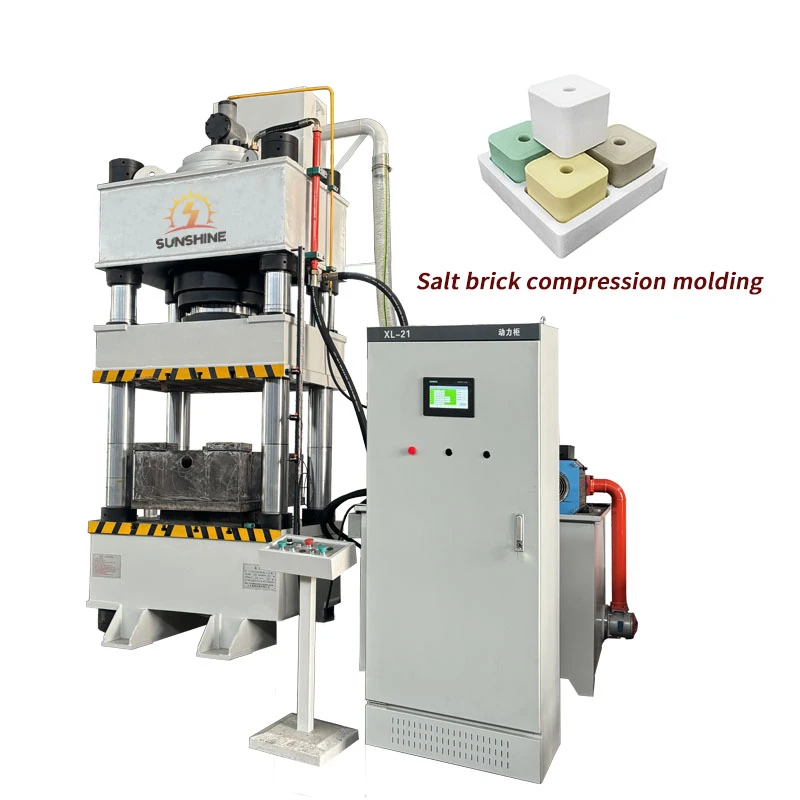


Salt Lick Block Press Machine For Livestock
Product Specifications: Suitable for common block weights of 3 kg, 5 kg, and 10 kg, with custom sizes and specifications available.
Mold Customization: Single-cavity and multi-cavity molds can be designed to match the required block dimensions, shape, and surface patterns.
Customized Solutions: We provide hydraulic presses, molds, and auxiliary equipment tailored to your drawings, samples, and production capacity requirements.
Send Inquiry
Product Details ofSalt Lick Block Press Machine For Livestock
If you are in need of salt lick block press machine for livestock to help with your business, please rest assured to wholesale with us. We are one of the leading such manufacturers and suppliers in China with over 20 years' history. And the customized service is also available.
Powder-forming hydraulic presses are used in a wide range of applications, including the production of livestock salt lick blocks, pharmaceutical tablets, compressed fishing bait, metal and ceramic powder products, powder metallurgy components, electronic ceramics, rare-earth powder products, silicon carbide components, ferrite magnetic materials, PTFE products, diamond-based products, and graphite components.
These presses serve a variety of industries, including automotive manufacturing, motorcycle production, machine tool manufacturing, home appliances, textile machinery, power generation, and aerospace.


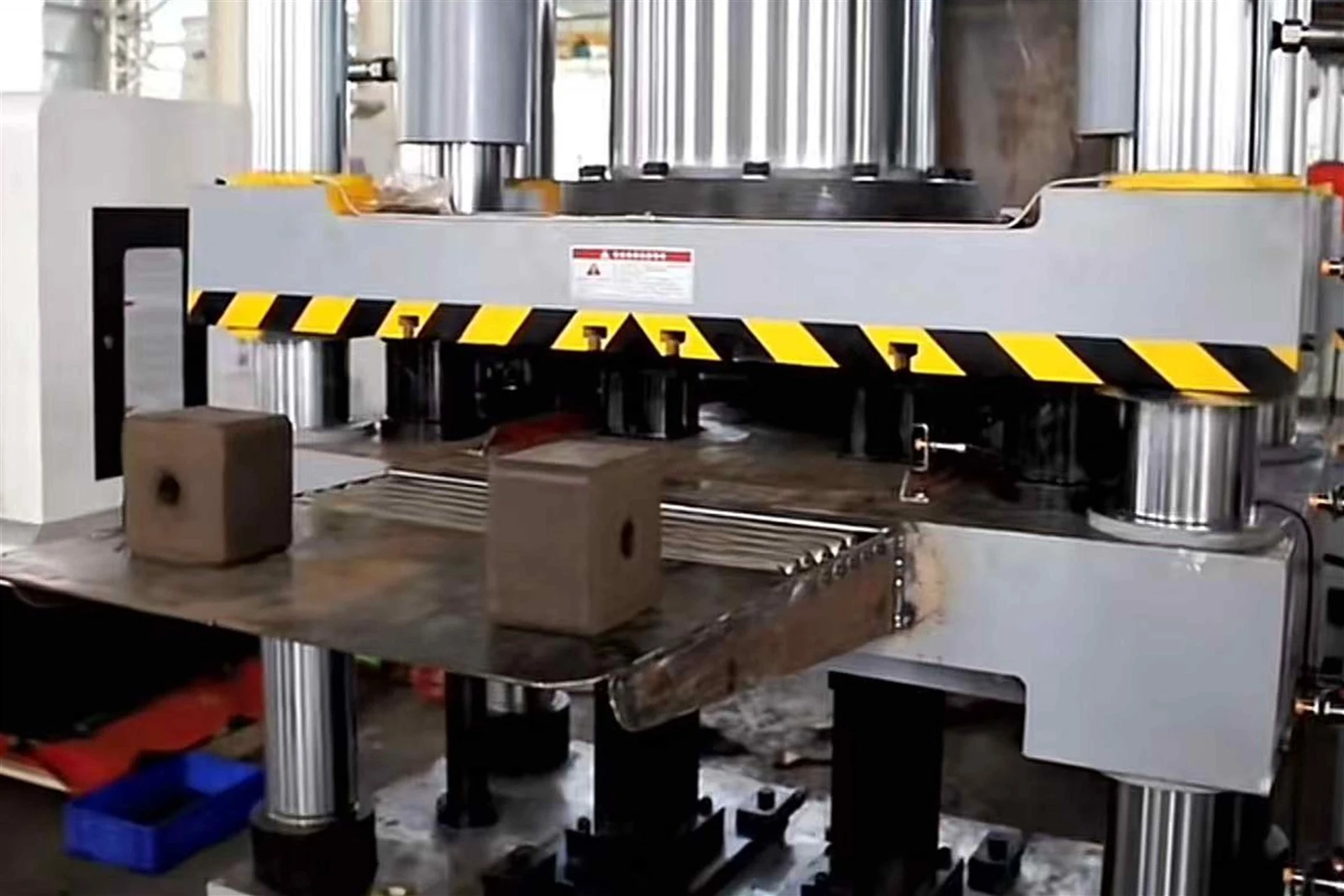

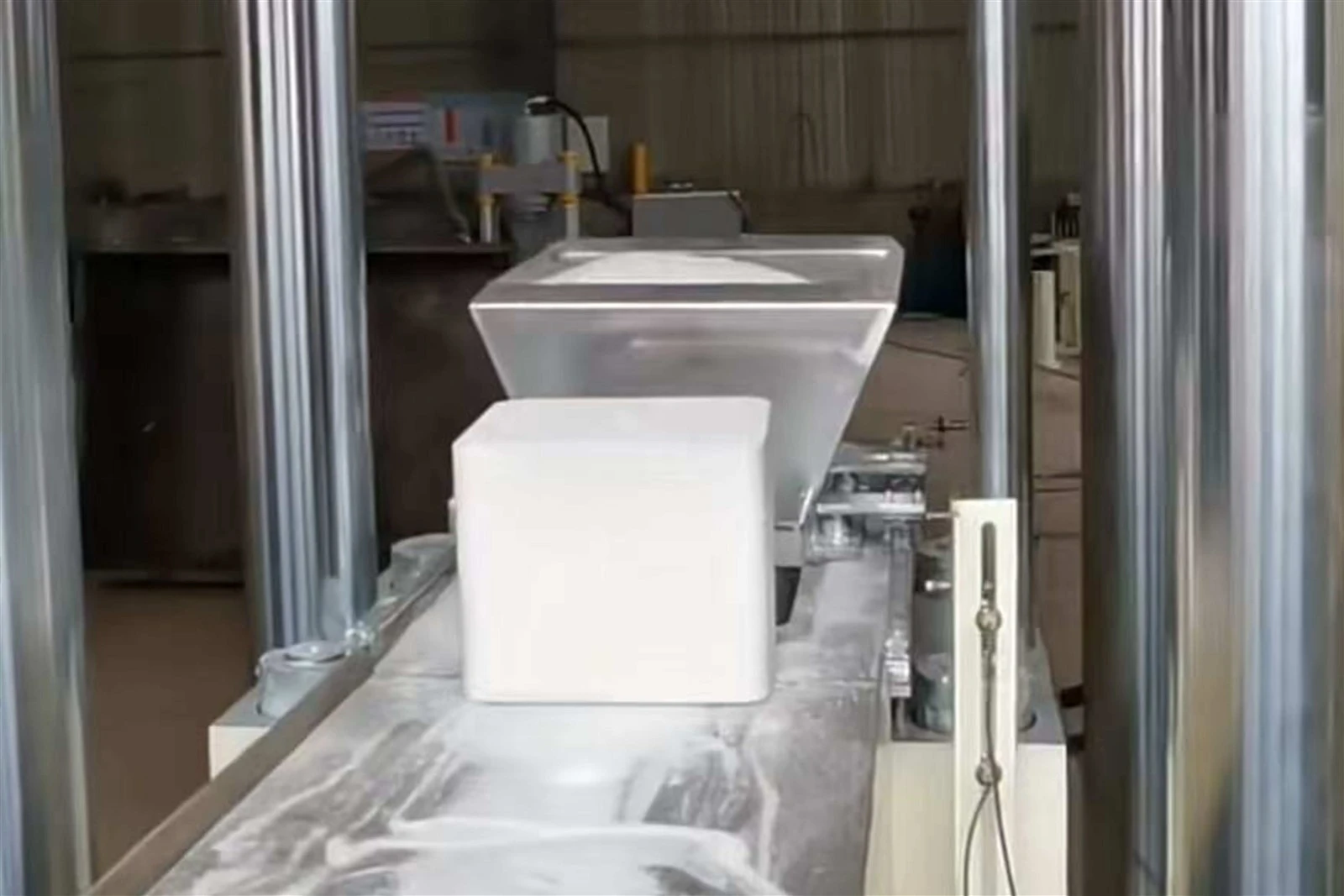
The level of automation required depends on the scale of salt block production. Smaller facilities may use manual loading and unloading, while larger plants can add auxiliary equipment to reduce repetitive handling and improve production efficiency.
When planning a production line, it is important to consider the entire process, not just the hydraulic press. Raw material preparation, feeding, pressing, demolding, inspection, weighing, and packaging all affect overall production efficiency.
We can help assess the required press tonnage and recommend a suitable production line configuration based on your target salt block dimensions, raw material formulation, production capacity, and available factory space.
Technical Parameters of Hydraulic Presses for Livestock Salt Block Production
| Technical Parameters | Y32-315T | Y32-500T | Y32-630T | |
| Nominal pressure | 3150 KN | 5000 KN | 6300 KN | |
| System pressure | 25 Mpa | 25 Mpa | 25 Mpa | |
| Slider stroke | 500 mm | 700 mm | 800 mm | |
| Maximum opening height | 800 mm | 1000 mm | 1300 mm | |
| Worktable dimensions | 800*700 mm | 1400*1400 mm | 1400*1400 mm | |
| Ejection force | - | 630 KN | 1000 KN | |
| under cylinder stroke | - | 260 mm | 320 mm | |
| Motor power | 15 KW | 22×2 KW | 22×2 KW | |
The specifications listed above are for reference only. Before placing an order, please confirm the final machine configuration, platen dimensions, ejection system, and other technical requirements with the manufacturer.
Hydraulic Press Configuration

Nominal Pressing Force
The required pressing force of a hydraulic press depends on the effective area under pressure, the properties of the raw material, and the specific compaction requirements. When using a multi-cavity mold, the total load across all cavities and the distribution of forces within the mold must also be considered. The weight of a single salt block alone is not enough to determine the required press tonnage accurately.
Slide Stroke and Maximum Daylight Opening
The slide moves along four guide columns, with its upper surface connected to the main hydraulic cylinder. The guide sleeves are made of cast iron and fitted with PTFE guide strips, while the bottom surface of the slide features T-slots for securing molds. When selecting the equipment, the slide stroke and maximum daylight (opening height) should be determined appropriately based on mold dimensions and the requirements for mold loading and unloading.


Motor Power and Hydraulic System Performance
Motor power affects hydraulic system performance, but the overall production cycle time also depends on cylinder dimensions, oil flow rate, slide speed, pressing time, pressure-holding time, and the time required for feeding and demolding. Motor selection should therefore take the entire operating cycle into account rather than relying on the motor's power rating alone.
Table Dimensions and Ejection System
A four-column hydraulic press is suitable for forming applications that require an open working area and sufficient space for mold installation and handling. The press table must be large enough to accommodate the mold and its supporting structure. If the production process requires assisted or automatic demolding, the available space and ejection system capacity should also be checked. Table dimensions are particularly important when using multi-cavity molds or producing salt blocks with complex or non-standard shapes.


Hydraulic Cylinder
The machine is equipped with a large piston-type hydraulic cylinder. The piston rod is connected to the upper crossbeam by a flange and to the slide through its mounting arrangement. The cylinder uses seals made from imported materials.
The piston rod is made of No. 45 carbon steel and has a hard chrome-plated surface to improve surface hardness and wear resistance. The perpendicularity and coaxiality of the piston rod and cylinder meet the applicable national inspection standards.
Hydraulic Power System
The hydraulic power system consists of a motor-pump unit, cartridge valves, and an electrical control cabinet. It supplies hydraulic power to the main machine and supports its operation and control.
The hydraulic system is located to the right of the main machine. The oil tank features a double-layer design to reduce the space required for installation.
Two-way cartridge valve manifolds are installed at the pump outlets and used to control the main cylinder. They provide functions such as directional control, hydraulic locking, load balancing, switching between high and low speeds, and overpressure protection.

Optional configurations

Automatic Feeding System

Infrared photoelectric protection device

Best selling Quantitative injection kettle
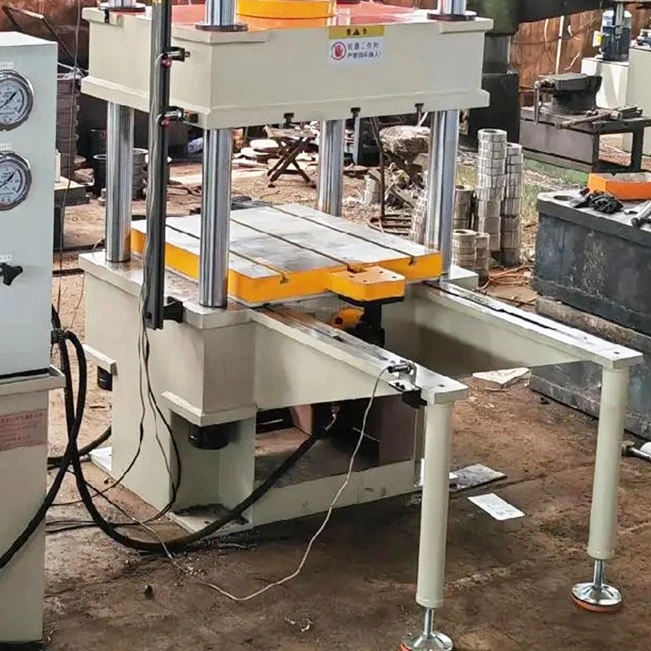
Mobile Workbench

Water cooling
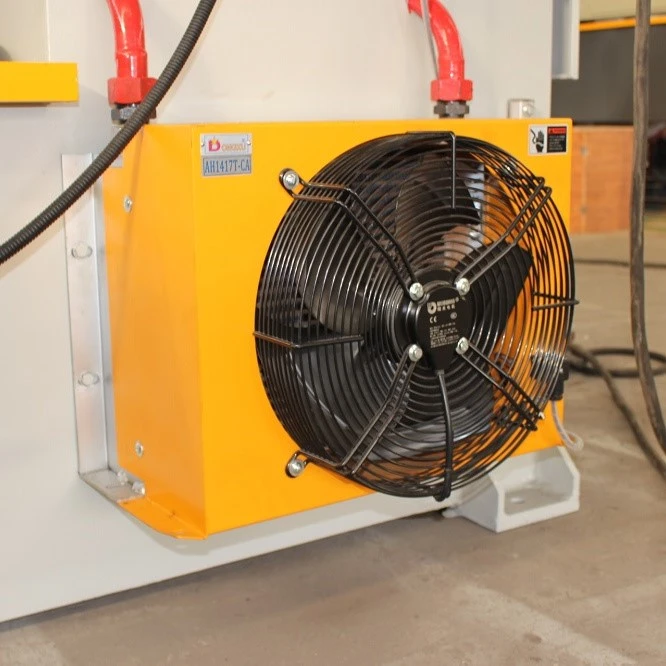
Air cooling

Servo motor

Hydraulic cushion
Equipment Operation Modes and Process Actions
1. Equipment Operation Modes
The equipment has manual and semi-automatic operating modes. Each mode can be set to either constant-pressure or constant-stroke operation using the selector switch on the control panel. The pressure-holding time can be preset from 0 to 999 seconds.
1.1 Manual Mode
Press and hold the corresponding function button to perform the required action. Releasing the button stops the action from being initiated further, and the control system does not automatically advance to the next step.
1.2 Semi-Automatic Mode
Press the pressing button to start the cycle. The machine then automatically completes the preset operating sequence for that cycle.
How to Select the Right Mold for a Hydraulic Press?
1. Choose the Mold Based on Product Shape and Dimensions
Start with clear product drawings or physical samples. Dimensions and features such as length, width, height, wall thickness, corner details, grooves, and hole positions all affect mold design. Complex shapes may require specially designed cavities or multiple forming stages.
You should also check that the mold fits the hydraulic press table. The mold height, maximum daylight opening, and slide stroke must be suitable for installation, operation, and product removal. Checking these dimensions before manufacturing the mold helps avoid compatibility problems during setup.
2. Choose the Mold Based on Material Properties
Different materials behave differently under pressure, particularly in terms of flow, compression, and release from the mold. Metal powders, ceramic powders, rubber compounds, and composite materials can all be used in certain compression molding applications, but each may require a different cavity design, feeding method, pressing process, and demolding arrangement.
For powder-based materials, particle size, flowability, moisture content, and target density can affect how evenly the cavity fills and the quality of the finished product. If the material tends to stick to the cavity walls or deform during removal, the mold design should include suitable measures to facilitate release.
3. Decide Between Single-Cavity and Multi-Cavity Molds
A single-cavity mold produces one part per pressing cycle. It is often suitable for larger workpieces, small-batch production, or applications where product specifications change frequently.
A multi-cavity mold produces several parts in one pressing cycle. When the product dimensions, material-feeding method, and press capacity allow, this arrangement can increase output per cycle. However, the required pressing force must be calculated based on the total effective pressing area and the pressure needed to form the material. The load distribution across the cavities must also be considered to help ensure consistent forming results.
4. Consider Demolding and Mold Service Life
After pressing, the finished product should be removable without chipped edges, surface damage, or unwanted deformation. Depending on the product's shape and material, the mold may require draft angles, an ejection mechanism, guide components, or other features to facilitate demolding.
Mold material and surface treatment should be selected according to the material being pressed, the operating loads, the expected production volume, and the anticipated wear. Proper alignment, regular cleaning, suitable lubrication where required, and routine inspections can help reduce abnormal wear and maintain consistent production quality.
What Other Products Can a Salt Block Hydraulic Press Produce?
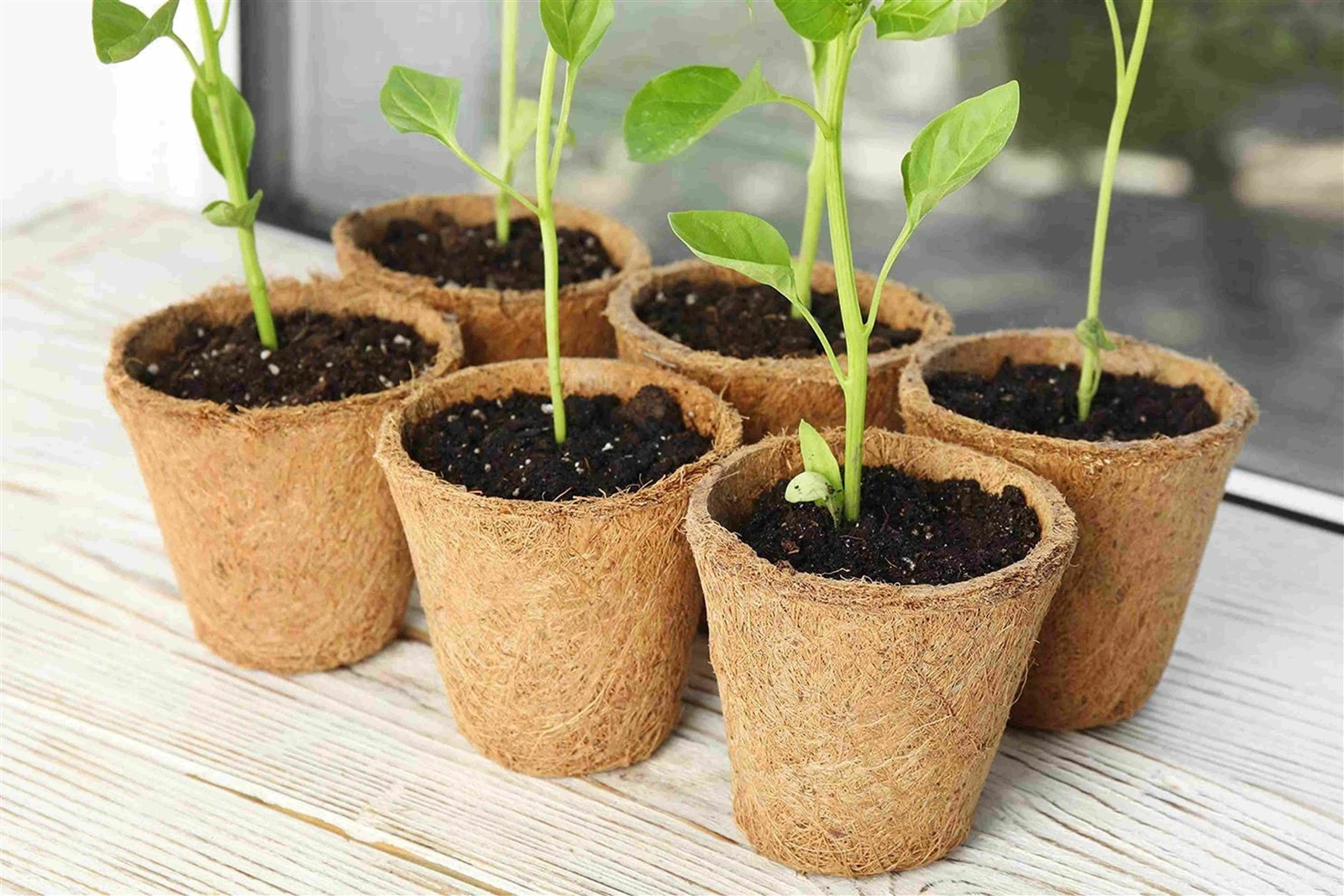
Seedling Cups and Planting Containers
Seedling cups, planting containers, and nursery blocks made from suitable compressible fibers or other plant-based materials may be produced using specially designed molds. Machine selection depends on the material's forming characteristics, product dimensions, wall thickness, mold structure, and demolding requirements. The suitability of the raw material for hydraulic forming should be confirmed before finalizing the equipment design.
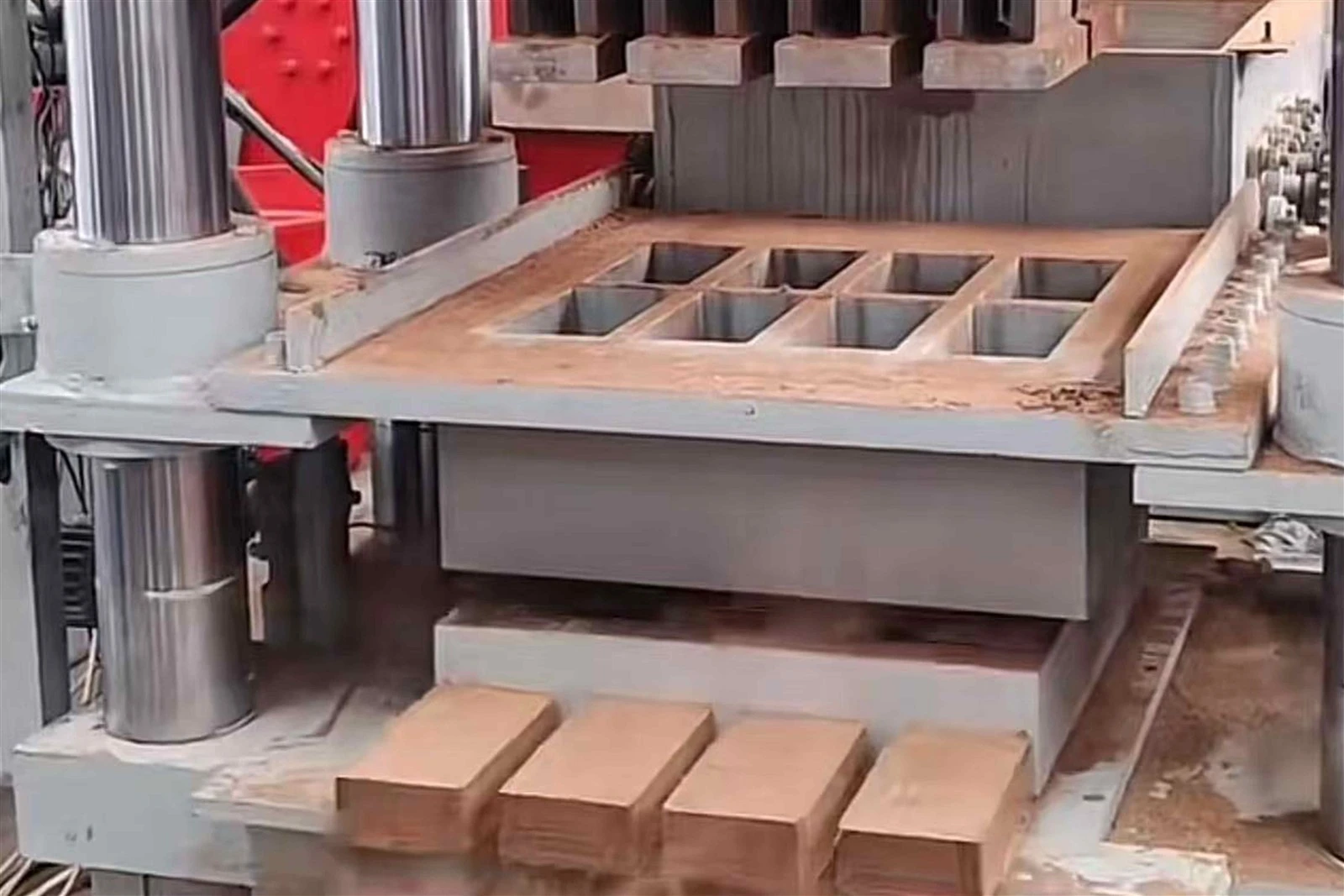
Coco Coir Bricks and Compressed Coir Blocks
Coco peat, coir fiber, and related materials can be compressed into growing medium blocks or compact packages for storage and transportation. A hydraulic press with a suitable mold can reduce the volume of loose material and form it into specified dimensions. The machine configuration should take into account moisture content, bulk density, target compression ratio, finished block size, and intended use. For coco coir bricks that need to absorb water and expand before use, the compressed structure should also be evaluated for rehydration performance.

Fishing Bait Blocks and Molded Bait Products
Powdered or granular fishing bait materials suitable for compaction can be formed into blocks or other shapes using application-specific molds. The process depends on the formulation, binding properties, moisture content, and demolding performance of the material. Since different bait formulations may behave differently during pressing, material testing or trial pressing is recommended before determining the final machine configuration and process settings.
Packaging and Shipment of Hydraulic Presses for Export

We have extensive experience exporting industrial equipment and can help arrange transportation according to your order requirements. We can also assist with preparing commercial invoices, packing lists, and other shipping documents based on your order details and the requirements of the destination country.
For hydraulic presses destined for overseas markets, including machines used for salt block production, we arrange packaging and shipping according to each machine's size, weight, and structural characteristics. The aim is to protect the equipment against moisture, impact, and movement during transport.
Before packing, the machine is cleaned and treated with anti-rust protection. Critical machined surfaces, hydraulic components, and electrical parts receive additional protection as needed. Depending on the shipping conditions, we use waterproof film, stretch wrap, shock-absorbing materials, and custom-built wooden crates. For large or heavy machines, we also consider the center of gravity, lifting points, and securing positions to support safe loading and transport.
After-Sales Service and Spare Parts Support for Salt Block Hydraulic Presses
01
If you experience problems with machine operation, pressure control, or the control system, please provide the machine model, a description of the issue, and any relevant photos or videos. We provide 24/7 remote video support for overseas customers.
02
After the warranty period, original spare parts are available for purchase at factory prices.
03
The entire machine is covered by a 24-month warranty. During the warranty period, necessary spare parts covered under the warranty will be supplied free of charge. On-site installation and commissioning services at overseas locations can be arranged upon request.

We manufacture four-column, single-column (C-frame), and frame-type hydraulic presses, with configurations tailored to different production requirements.
Please send us your product drawings, technical specifications, or details of your application. We will assess your requirements and recommend a suitable hydraulic press for your project.
Hot Tags: salt lick block press machine for livestock, China, suppliers, manufacturers, wholesale, customized, beverage four column hydraulic press, high speed hydraulic press, leather four column hydraulic press, multifunction hydraulic press, nut four column hydraulic press, polymer four column hydraulic press
Send Inquiry
